THE WILDS AND THE GRINGLEYS
ANNALS OF THE FAMILY
The Human Side
compiled by
PAT MONEYPENNY (nee WILD)
Dedicated with love to the memory of my father, HAROLD ERNEST WILD 1896 - 1979
January 1999
The main part of these annals is derived from dad's diaries, from 1911 to 1913, and consequently, his life figures large in them. I am also indebted to Elaine who did some actual research on the earlier family; to Laurie Lister who has given me much information about the Gringleys; to Donald, who has given me information about West End and Westfield Farms; to Peter, who has kindly given me Matthew's Indenture; and to Grace and Marjorie, who have also furnished information. My thanks to you all.
PREFACE
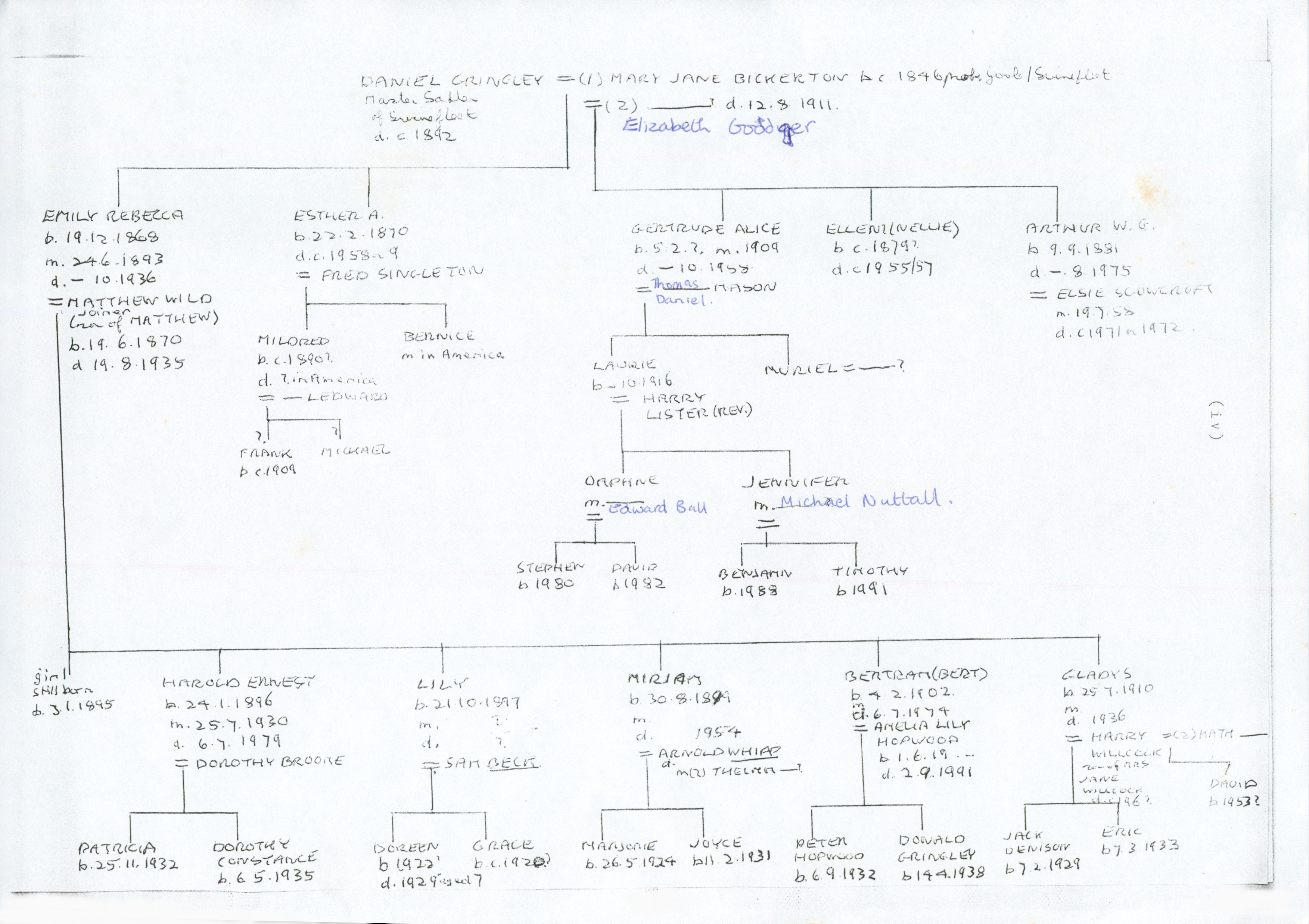
The family tree I have included only goes down to the various cousins of my generation, primarily for reasons of space, but I have outlined their families in the text, briefly. (I have drawn up family trees for the various pairs of cousins onwards, but have not included them. )
I am still uncertain in my mind about the Location. of the two Wild family farms, West End Farm, and Westfield Farm. Westfield, from dad's diary is obviously at Norton near Doncaster, but I am still not clear which of the two is now an old people's home and which was demolished and replaced by a bungalow.
I am sure there are many other discrepancies and errors, for which I apologize. If anyone has any corrections, additions, or comments, I shall be pleased to receive them.
Pat Moneypenny. .
CONTENTS
- Preface
- Contents
- Family Tree
- Grandpa and Grandma
- Matthew and Emily's family
- Dad's early years
- Dad and War Protests 1914-1917
- Dad's life 1918-1930
- Matthew and Emily's family
- Family gatherings
- Addendum 2026
Family tree
Grandpa and Grandma
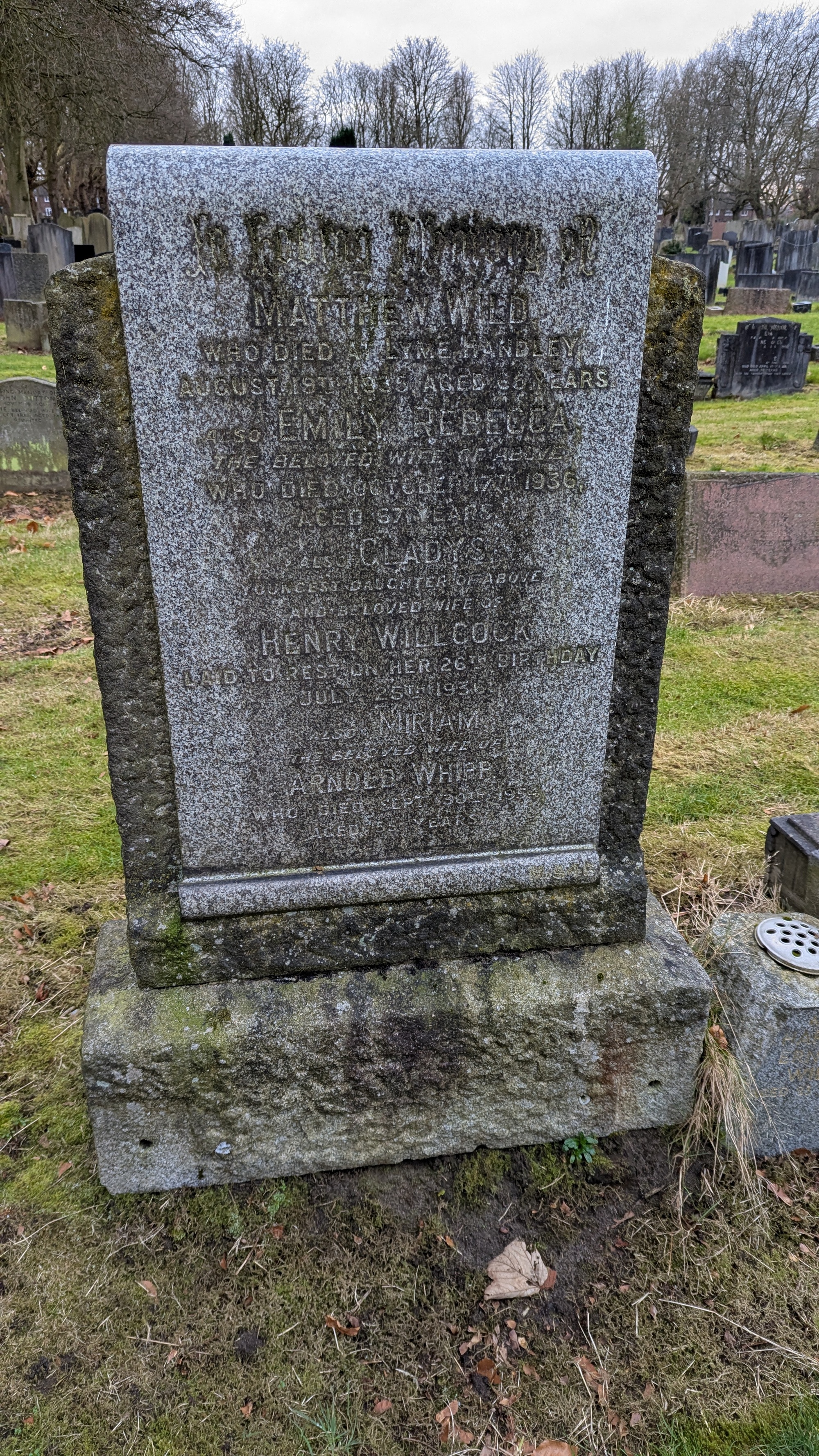
On Saturday the at 10.30 a.m., Matthew Wild, aged 23, a joiner, of Swinefleet, Yorkshire, was married at North Street Wesleyan Chapel, Goole, by the Rev. Brown, to Emily Rebecca Gringley, aged 24, daughter of a master saddler of Swinefleet. These were my grandfather and grandmother.
I have only hazy recollections of Grandpa Wild, sitting me on his knee and showing me his pocket watch on a chain in the fashion of the day. Grandpa died in 1935 aged 64, when I was something over 2½ years old. I remember Grandma Wild a little better.
I was nearly four when she died in October 1936.
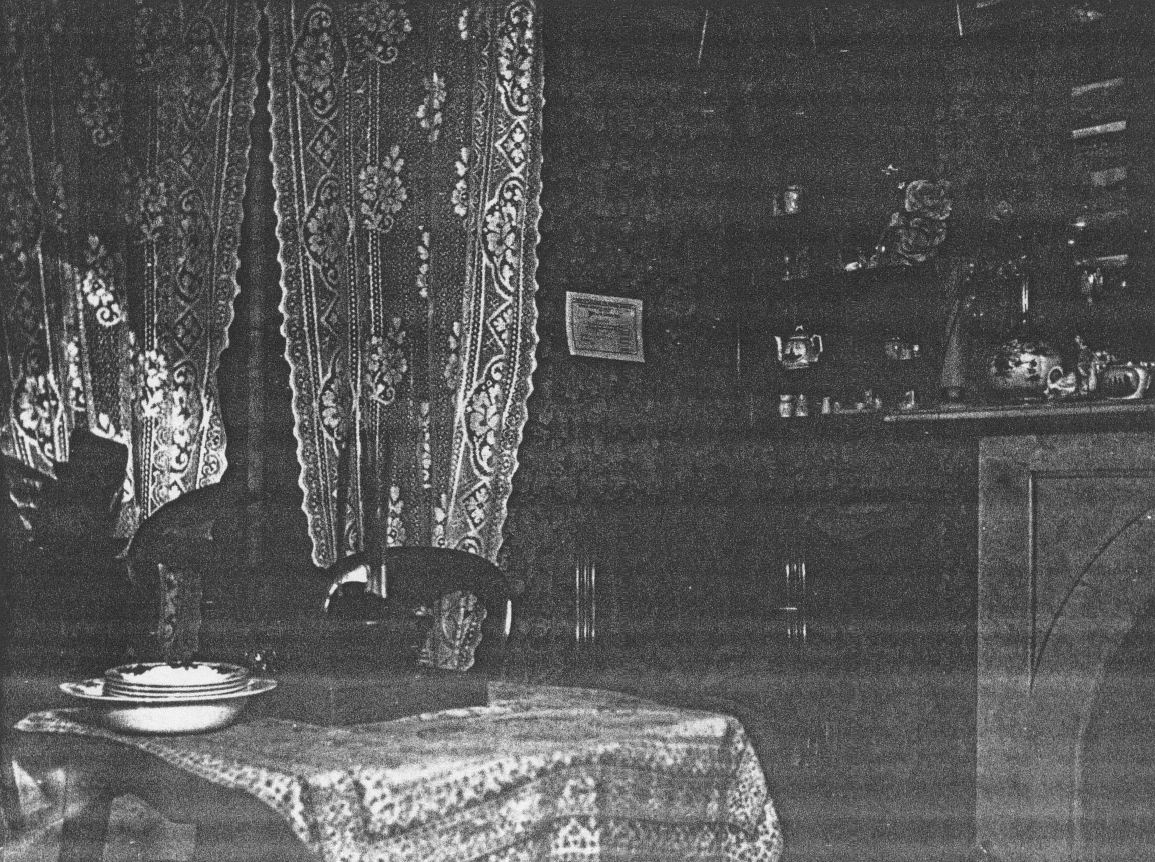
I was very fond of her and I remember being at a family party at her home, 20 Slade Grove, Longsight, Manchester. I remember the curtains in the big kitchen, which were white with a pattern of lovely roses all over them. I remember being in the parlour and playing with some Gosse (?) china which she had on a shelf in a wall bookcase that Grandpa had made, I think, which later came to our house, and which Dorothy now has. I also remember sitting on a horsehair chair, and the horsehair pricked my legs, and sitting at the piano with cousin Peter (who is about my age), and we played tunelessly together on the piano. There was an aspidistra on a stand in the little bay window of the terraced house. I can just remember being in the back yard, and grandma showing me her ferns, of which she seemed fond, though I didn't share her love of them.
I remember her putting me to bed at 128 Burnage Lane where we lived, and on finding out that I didn't say prayers, she seemed rather sad. "Doesn't your mother say prayers with you when you go to bed?" she asked, and there and then she taught me 'Gentle Jesus, meek and mild.'
Another time she must have taken me to Handley Barn Farm, and I remember very dimly going up the stairs to bed there (the stairs led through a door out of the big farm kitchen) .
I have always felt that Grandma was close to me, but that is all I remember of her and grandpa.
The Gringleys
I think Elaine has a copy of Grandma Wild's birth certificate - at any rate, I have the details. She was born on , presumably at Swinefleet, Yorkshire. Her father was Daniel Gringley, a master saddler of Swinefleet, and her mother was Mary Jane, formerly Bickerton.
I feel sure that I have seen the Indenture for the apprenticeship of Daniel Gringley, as a saddler, and I thought mother had given this to cousin Peter. Peter eventually found an Indenture, which he kindly passed on to me, but it proved to be that of Grandpa Matthew Wild. So what became of Daniel's indenture I do not know.
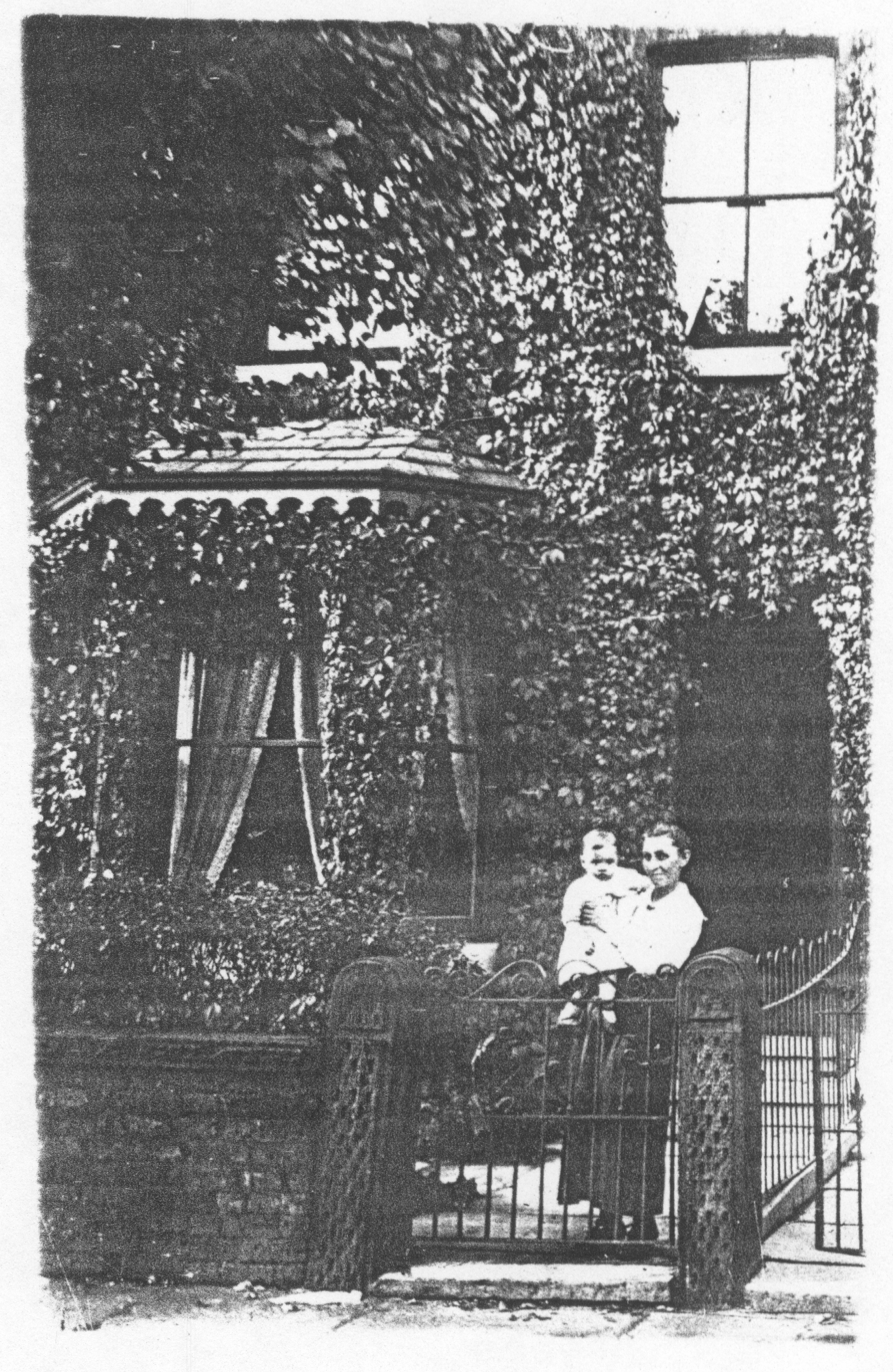
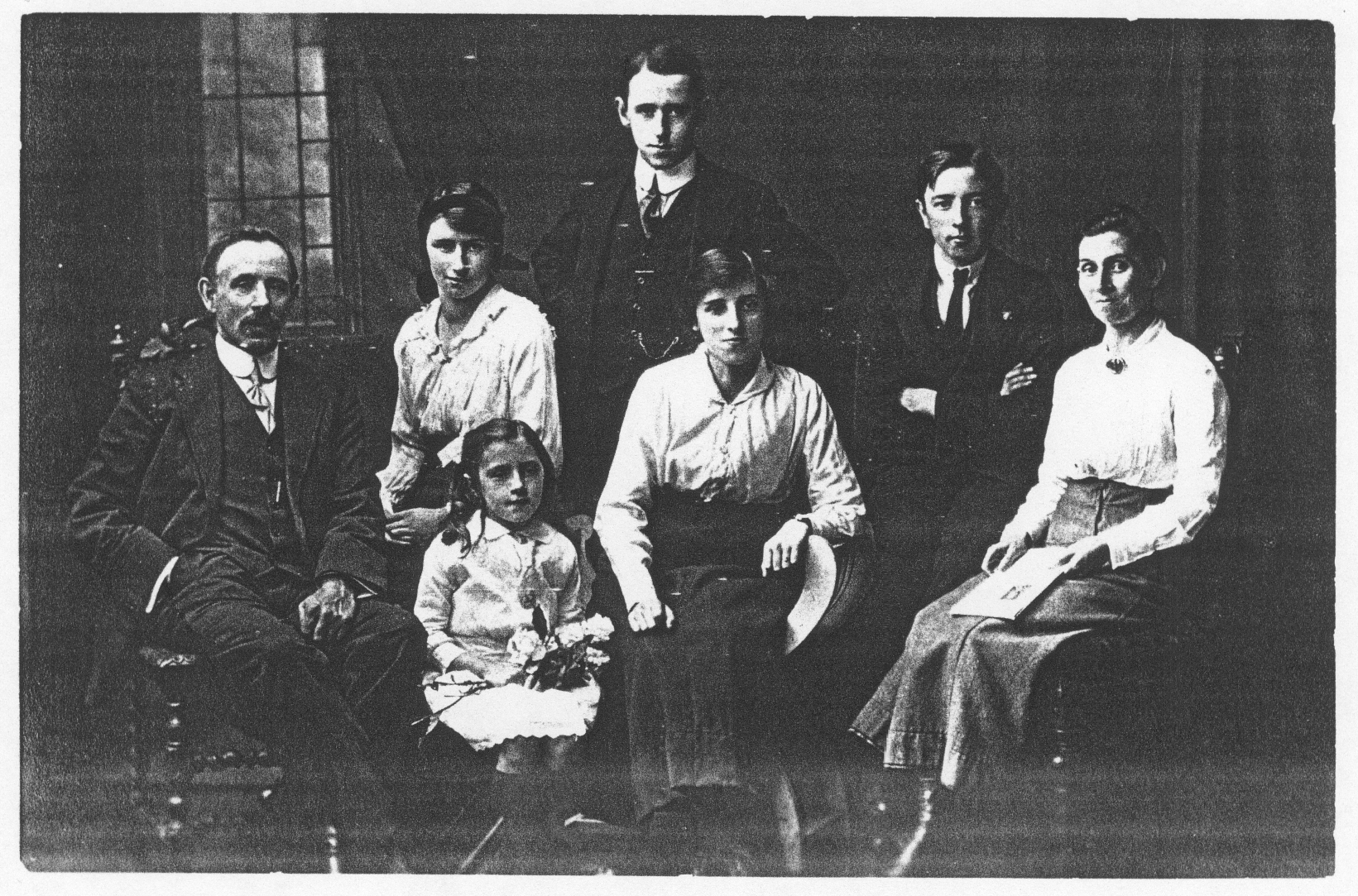
Grandma's mother died when she was very young and many years later, in 1919, she wrote a touching poem 'My mother's Grave' (a copy of which I have) and in it she says
I had not reached quite three years old
My sister younger still
when her mother died. The poem has several verses.
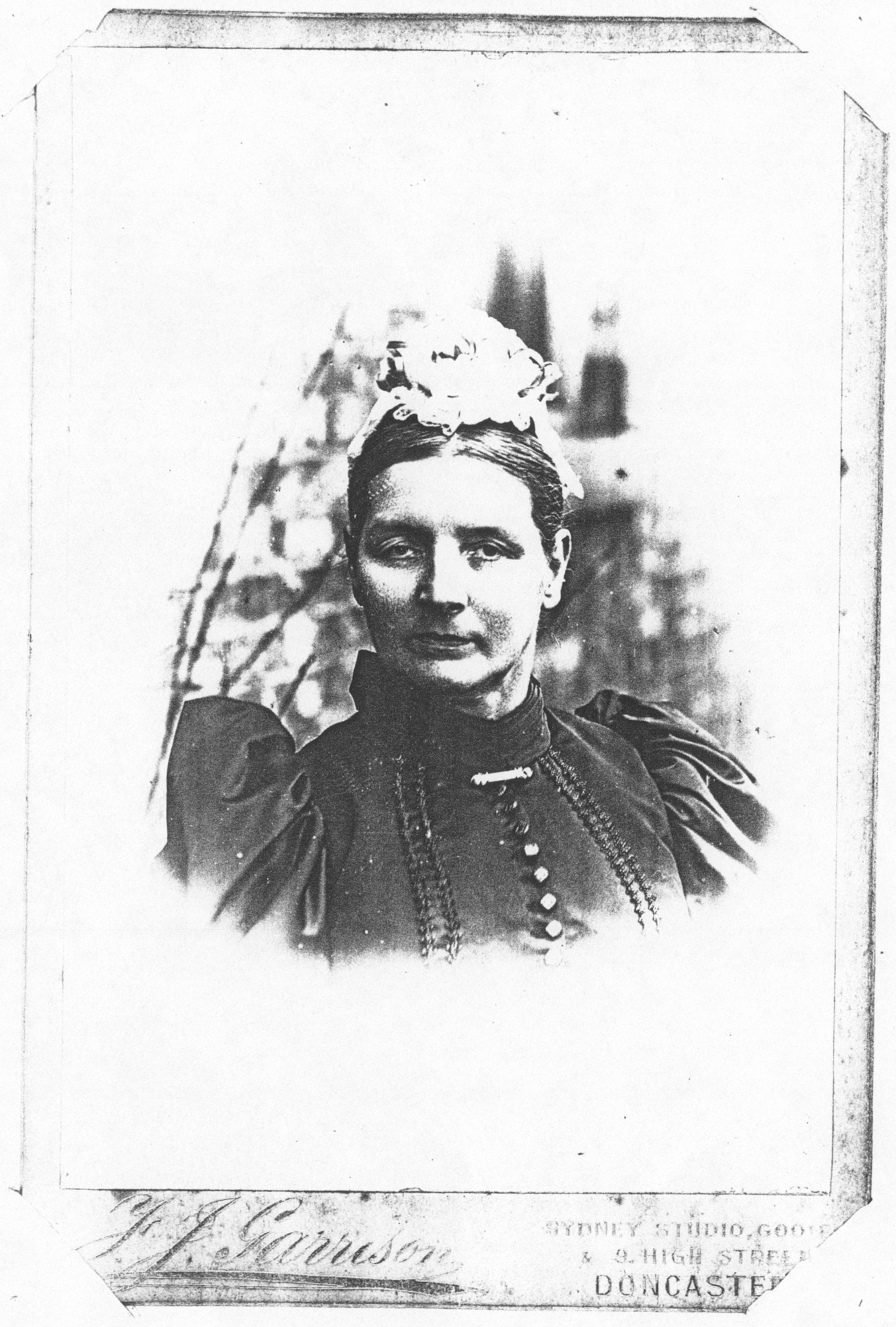
Grandma's younger sister was Esther A. Gringley, born . After his wife's death, Daniel, Grandma Emily's father, remarried, but I have no details of his wife. They had three children but I only have the date of birth of their son, Arthur - . Their daughters were Nellie (Ellen?) and Gertrude, whose birthday was , and was the eldest of the three, but I do not have her year of birth. Gertrude's married name was Mason, and their daughters were Laurie (Mrs. Lister) and Muriel who died some years ago. Gertrude died in October 1958.
Aunt Esther's letters to Gertrude 'all stopped after my mother and Aunt Nell died,' says Laurie. 'Aunt Esther died just before Aunt Nell, I think.' In another letter to me she says 'Uncle Arthur was only a few years younger than Mildred and Bernice (Esther's daughters). He was only 11 when his father died.'
I met Great Uncle Arthur in 1953 and his gentle and unassuming sister Nellie (who was unmarried, as was Uncle Arthur) who kept house for him. These three were of course step-brother and step-sisters of Emily (my grandma) and Esther.
Great Uncle Arthur spoke of his niece Laurie, Gertrude's daughter, and her husband, Rev. Harry Lister, and my mother had letters from them in 1991 and 1992 when they lived in Southport. Harry was the Methodist Minister at Banks, Southport, where they still worship. I have recently been very pleased to make contact with them and they are still in Southport, (now in their eighties).
From Laurie's letter to mother at Christmas 1992 they have two daughters, Daphne and Jennifer. Daphne is married to Edward and has two sons, Stephen aged 12 and David 10 (at Christmas 1992) and Jennifer has two sons, Benjamin (4) and Timothy (1¾) (also at Christmas 1992). - The elder daughter, Daphne, lives at Nottingham, and Jennifer the younger one at Sheffield. Laurie says in the letter to mother "We went to Goole and Swinefleet one day in July and tidied up the grave where my aunt and uncle, my mother and sister and her husband are buried. The old churchyard is overgrown and I couldn't make out names on many headstones, including my grandparents (Gringley) and Harold's (Wild's)" i.e. dad's grandparents.
In a letter to me of January 1996 Laurie confirms that Uncle Arthur "was cremated and his ashes interred in Swinefleet cemetery in the grave where Aunt Nell, my mother (Gertrude Alice) and my sister and her husband's ashes are."
In an earlier Letter to mother of February 1991 she says "I remember that Aunt Emily used to have family gatherings. Dorothy must take after her." Mother had had a 'wonderful time with your (i.e. 'her') family on New Year's Day.'
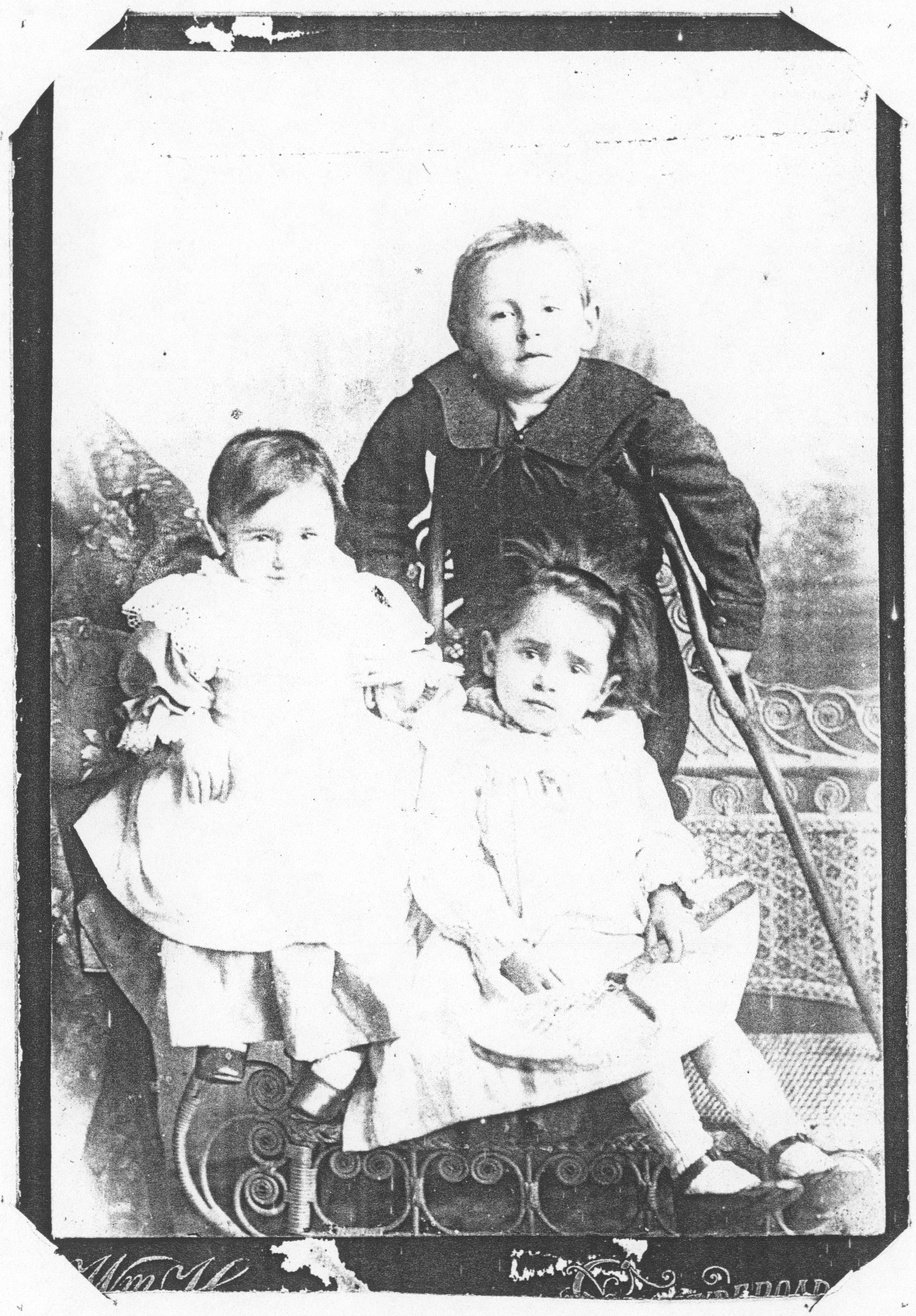
Laurie and Harry used to live at Alston where in the severe winter of 1963 they were snowed up for about six weeks, and in latter years in Banks near Southport, where Harry was the Methodist Minister.
When Aunt Esther grew up she married someone called Fred
Singleton and they had a daughter Mildred. They also had another daughter Bernice, of whose existence I was not aware until told by Laurie Lister, quite recently. The family went out to live in
America, and Bernice (says Laurie) married in America. Dad refers to Uncle Fred in America () so I assume he had gone out there ahead possibly to find work. I knew that Aunt Esther lived in Keswick at some point, for dad had made a notable visit there in 1911 (related later.)
On , according to dad's diary, "Frank (Emily's boy who came on Monday with Aunt Esther and Mildred from Keswick on their way to meet Uncle Fred in America) having had whooping cough... I felt a little uneasy."
Dad gives Frank as being 'Emily's boy' and in the same entry mentions Emily Singleton with her young man. But Laurie Lister mentions Frank as 'Mildred's son I think'. Perhaps Emily was a sister of Fred Singleton and perhaps dad was not aware of Frank's precise relationship.
Dad's diary goes on:
" (1912): Aunt Gertie (with Muriel), Emily (Singleton) with her young man came, Aunt G. for the day only, the other two until Tuesday.
": Herbert slept with us. : Emily and Herbert went back and the others with them to Leeds then on to Goole." (Would Herbert be Emily's 'young man'?)
: Went. to Cornish's, St. Ann's Square for a copy (1/-) of "Poems of Cheer" by Ella Wheeler Wilcox. I read one or two of them and found the verse was splendid. Father thought it would be a very suitable present for Aunt E.
": Mother had to go to Goole to the settling up of Mr. Gringley's affairs and expected only 2 or 3 pounds. She landed home at night however, along with Aunt, M. and F. with £73 and odd." (Mildred and Frank presumably.)
": At 8.15 I said Goodbye to Aunt Esther, Mildred and Frank who sail today on the "Mauretania" for New York."
Laurie says "Aunt Esther and Uncle Fred did live in Keswick for a short time before they went to America. I remember her coming over to England once with Frank, who was about 12. He was Mildred's Son I think. Aunt Esther was a great correspondent. The letters all stopped after my mother and Aunt Nell died. Aunt Esther died just before Aunt Nell I think."
If Mildred was Frank's Mother, this would account for Aunt Esther, Mildred and Frank as described by dad coming together from Keswick.
I have a photograph of Esther aged 17 taken about 1887," and another one dated Christmas 1911 (i.e. before they went to America) inscribed 'A merry merry Xmas to all you dear ones at Slade Grove. Your loving Sis. (i.e. Aunt Esther.) It shows
Aunt Esther, seated, with a young lady, presumably Mildred, standing, and a little boy (Frank?) of about two or three years. This might fit in with Frank being 12 when he came over for a visit from America with Aunt Esther, which would possibly be about 1922 therefore.
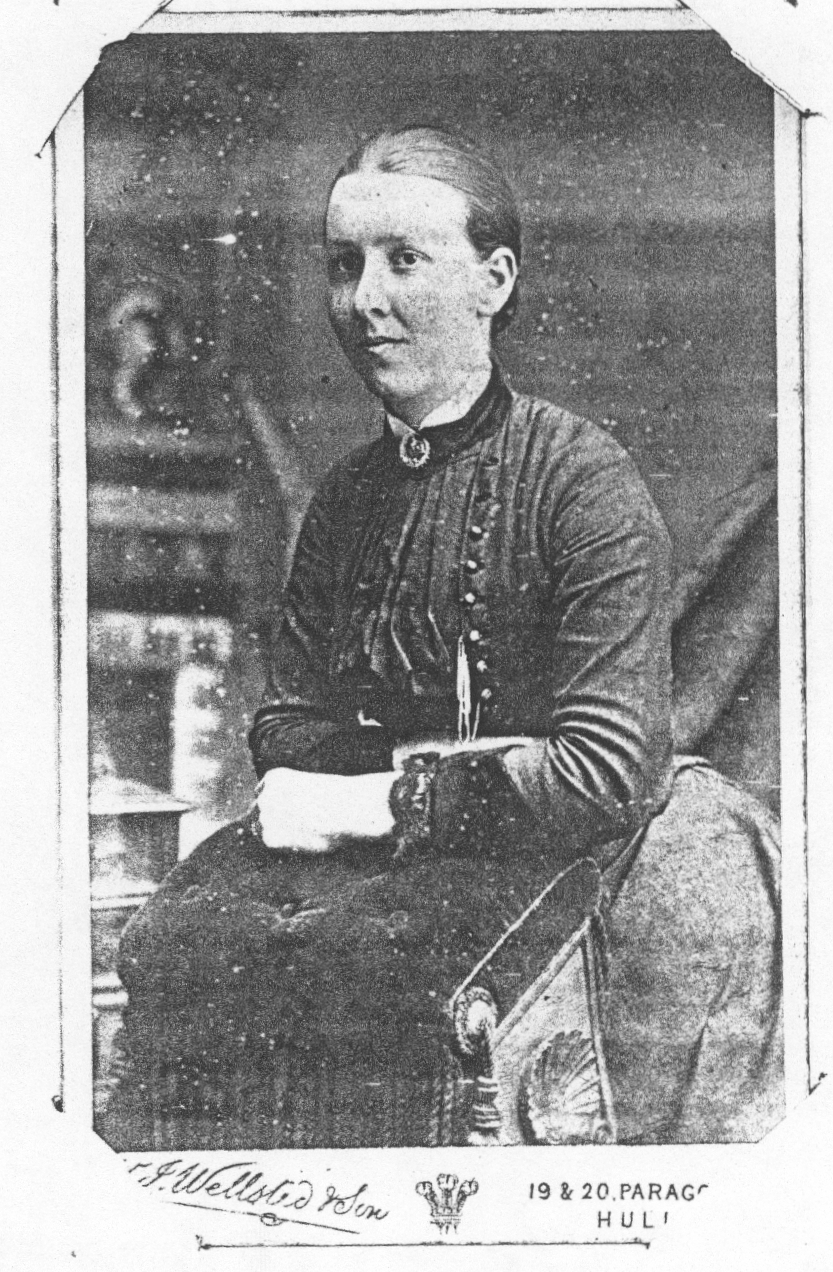
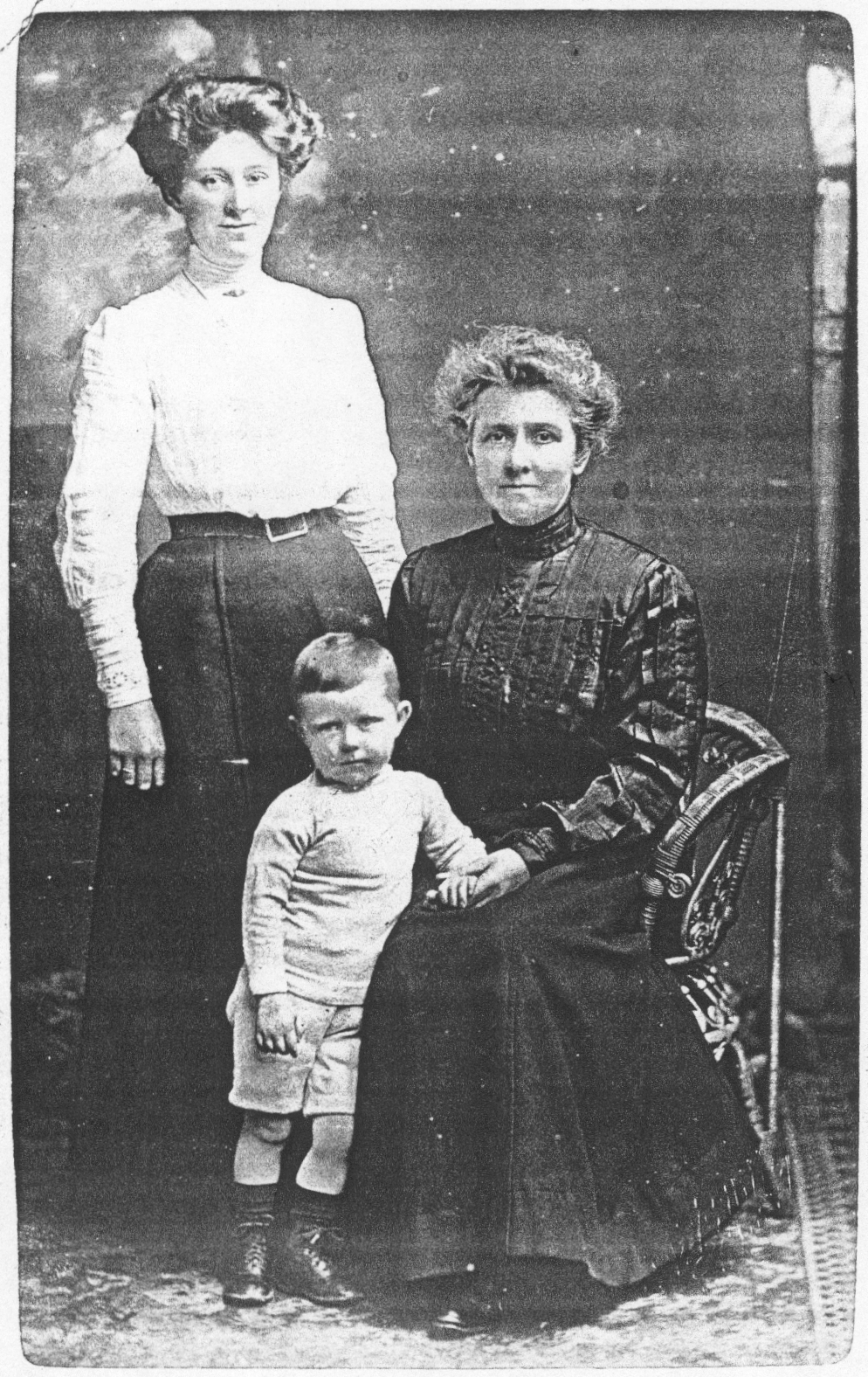
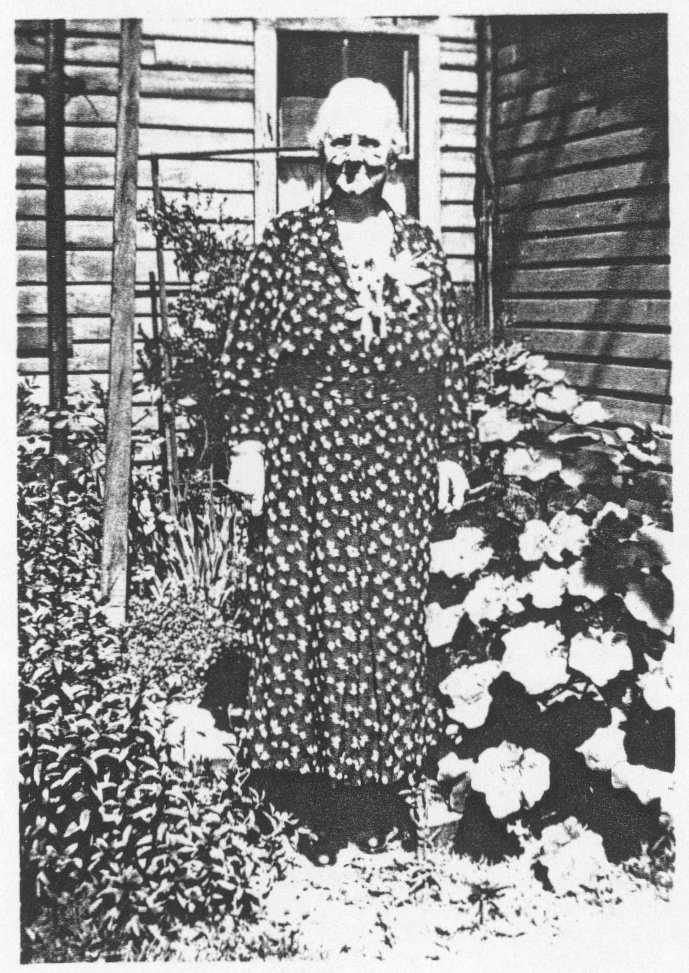
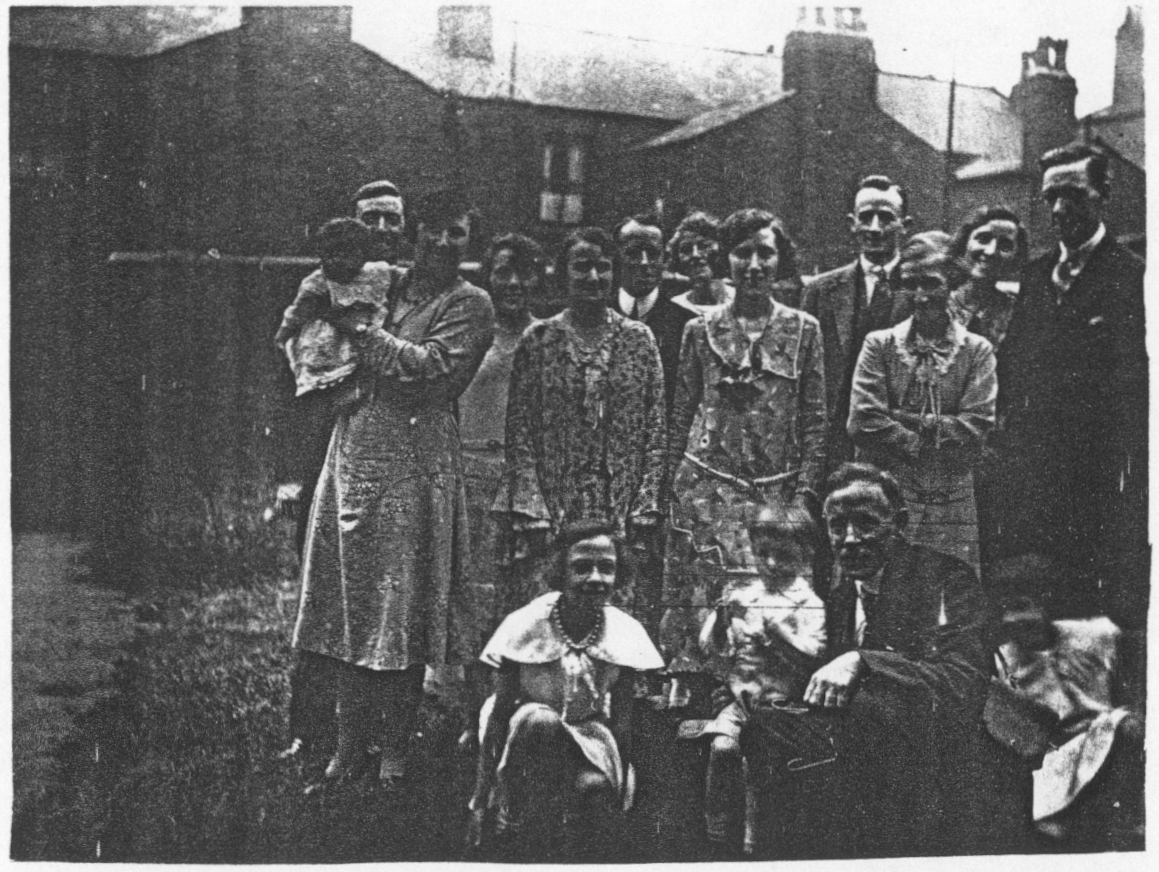
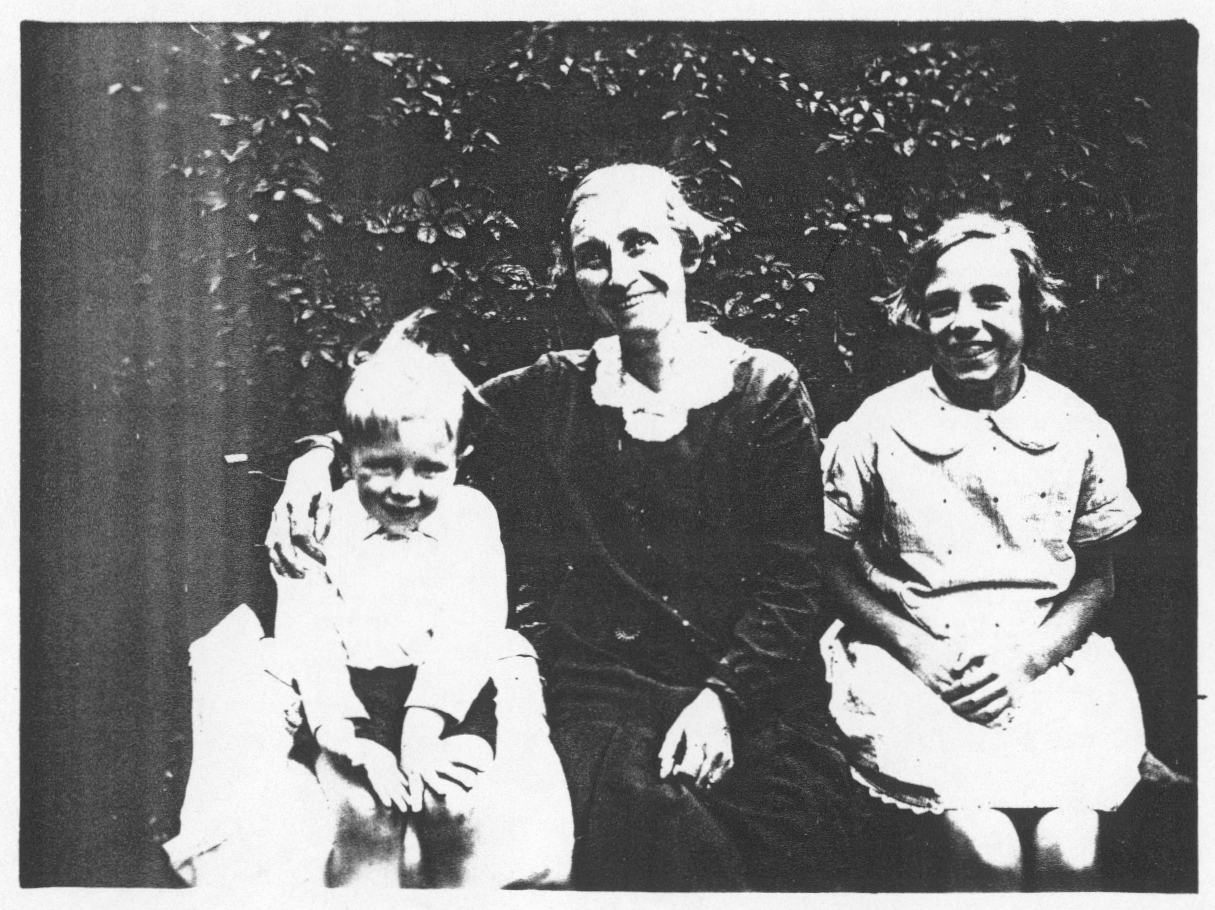
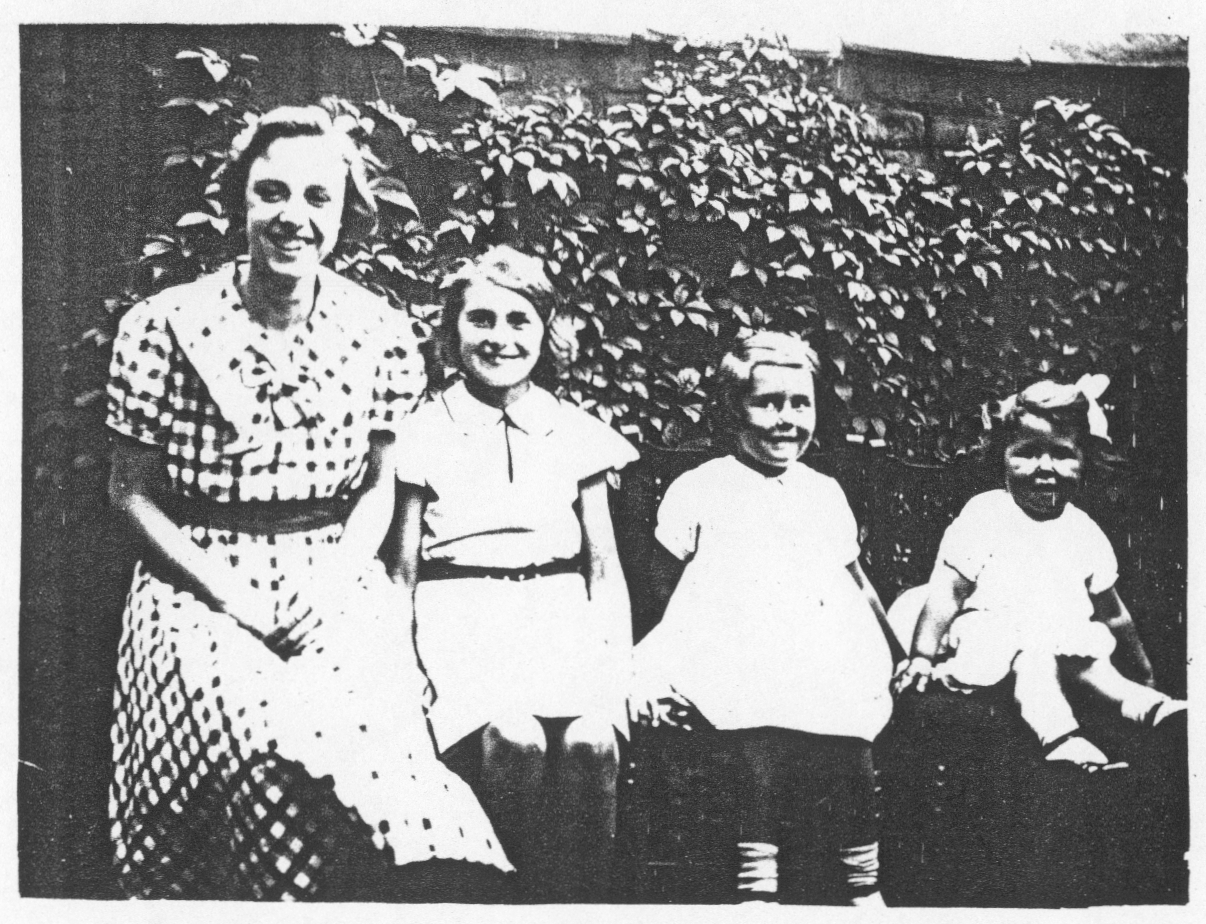
Aunt Esther kept in touch with dad for many years. The only address I have (in dad's address book) is crossed out but reads '17 Harvester Avenue, Batavia, N.Y.' and there is a photo of Aunt Esther dated September 1936, evidently sent to Grandma, inscribed 'Love from Your loving Sis Esther. Sorry I've not Dad's photo. Batavia N.Y., U.S.A., Sep. 1936. I'll send you one with Mildred Leonard me and Michael on if I get some. I think I sent Art. one. Aren't I PHAT.' This must have been the last communication grandma Emily received before her death in October 1936.
Laurie says "Aunt Esther was a great correspondent. I can remember seeing some of her letters to mother. I can't remember exactly when she died, but it must have been around 1958 or 9.
She sent Mother and Dad a Golden Wedding card in 1958 - a year too soon, as they were married in 1909. Mother died in October 1958 so didn't live till their Golden Wedding. After that all correspondence with our American relations fizzled out." I remember dad receiving letters or cards from Aunt Esther but I don't know when the last one was.
On , only a month before Aunt Esther's departure for the U.S.A., dad's diary records 'The papers broke the sad news of the sinking of one of the giant ocean liners, the "Titanic" with 1683 people off Newfoundland. ' One can imagine with what additional trepidation Aunt Esther and her party embarked on the Mauretania, to take up their new life in America.
On , dad takes up the tale: "The papers brought no better news on the case of the ill-fated "Titanic", and 2 or 3 millionaires and W.T.Stead and a number of well-known people are thought to be lying now at the bottom of the ocean."
", 6.10. Amongst other sad reports disclosed by the morning press was that the captain of the "Titanic" shot himself when the vessel was sinking." but this it transpired was merely a rumour.
". Afternoon I rather enjoyed as a change the job of writing addresses on about 6 doz. envelopes for letters asking the various insurance companies to let us know their loss in connection with the Titanic disaster. It is now thought that the captain did not shoot himself, and all the reports testify that he did his duty heroically. The boat struck the iceberg on Sunday night () about 10 o'clock- and sank about 2 o'clock on the following morning. Of the couple of hundred who were saved the last man to leave the ship had the most marvellous escape.
He was high up when the vessel began to sink and he took a leap but was sucked under by the ill-fated ship. He struck out and with a great effort held his breath and he felt himself pushed upwards, probably by explosions from the ship. He then swam and helped others. The gallant captain walked about and at one. time shouted down to the people "Be British". Many probably could have been saved had they taken to the boats as many believed the huge vessel was unsinkable and refused to go out in the cold in an open boat. Perhaps the finest example came from the band. They at first played lively tunes but there was a pause and the bandmaster (who was a Primitive Methodist) instructed his heroic companions to play "Nearer my God to Thee". So through the midnight air, through those awful moments, the memory of which can never pass out of the minds of the survivors, that company of staunch musicians played the grand old hymn with a courage that has since thrilled the hearts of millions of people I dare say.
It was the Titanic's first voyage and she had been fitted up in the finest modern style. The "Carpathia" which on hearing by wireless telegraphy of the collision had hastened to the scene, was about an hour and a half too late."
To return to the Wild and Gringley families: Laurie goes on in the letter of January 1996, "My mother was very fond of her step-sisters Emily and Esther. Esther, of course, in America used to be a good letter writer. Mother often used to go to Manchester to see Aunt Emily and Aunt Emily would sometimes come to Fleetwood. She also came to Swinefleet once when we were there. She brought Grace with her (Lily's girl). She was about 8 or 9 I think. My mother was the eldest of the three after Emily and Esther." She continues: "I think the Gringley's family spread far and wide, but there don't seem to be many, if any, of that name left. The males seemed to die out without male descendants."
In a letter to me of , Laurie thanked me for copies of grandma's poems which I had sent her. "I thought (they) were very good. I had no idea that she wrote poetry. I remember she once came to Fleetwood with Gladys and Jack who was about 2 Years old... I am 79 and Harry is 81."
Laurie kindly sent a recent photo of themselves and also one of Uncle Arthur's saddlery shop in Swinefleet now turned into a room of the house, and more recently a photo of her own family.
Great Uncle Arthur and Great Aunt Nellie
In 1953, not long after Norman and I got engaged, mother, dad and I went on a day trip one Sunday (it must have been by train) to Goole. We had arranged to visit dad's Uncle Arthur and Aunt Nellie at Swinefleet and we either walked or got a taxi to their home - a rambling, fairly large cottage, beautifully kept, with a very neat garden at the back, and an outside toilet. Uncle Arthur was a keen gardener, but they evidently weren't worried about bringing the cottage up to date. Uncle Arthur was a bachelor of 71... and Still rode about on his bicycle. He was a very quiet, pleasant, gentle person (like all the Gringleys) and I am not sure if he was retired or net then from the saddlery business. He was a keen Wesleyan and later on asked if we'd mind if he went off to the evening service as he had things to see to at chapel, to which of course dad wholeheartedly acquiesced.
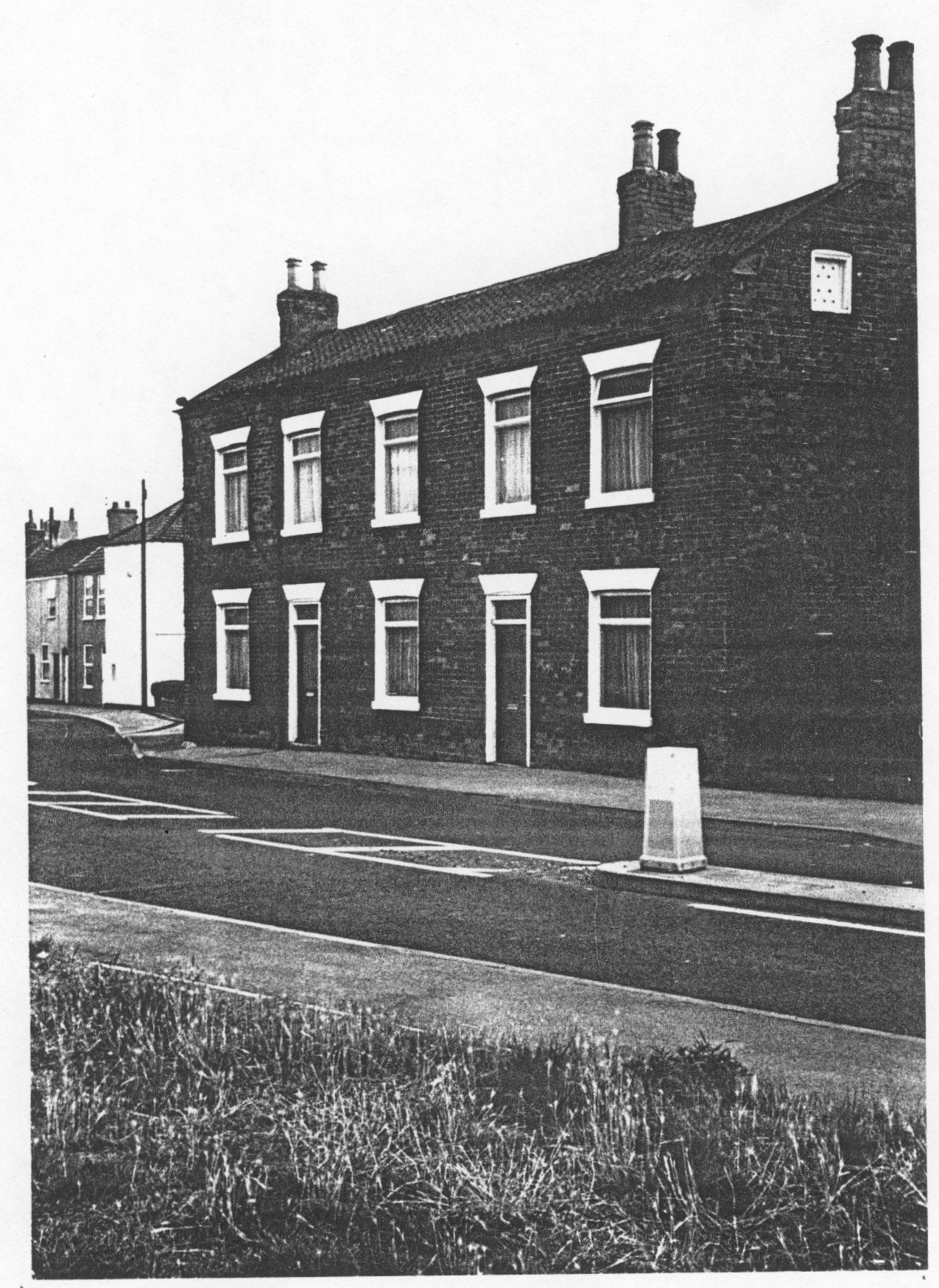
We were treated to a lovely tea including my favourite raspberries from the garden. We had some lovely talk and later, probably when Uncle had gone to church, Aunt Nellie responded to our news of the family with a quiet "Just fancy!" only she said it "'S fancy!" which stirred a long-forgotten memory of my Grandma Emily - I'm sure she used to have the same habitual phrase: "'S fancy!"
Subsequently Uncle Arthur as we called him (I don't think he cared for the 'Great'!) Came over to visit mum and dad at Burnage (21 North Avenue) and we enjoyed meeting him there again on two or three occasions, when he also visited Bert and family at 12 East Avenue .
Some time after our visit to Swinefleet, we had a sad letter from Uncle Arthur to say that Nellie had fallen while hanging some curtains and died in consequence.
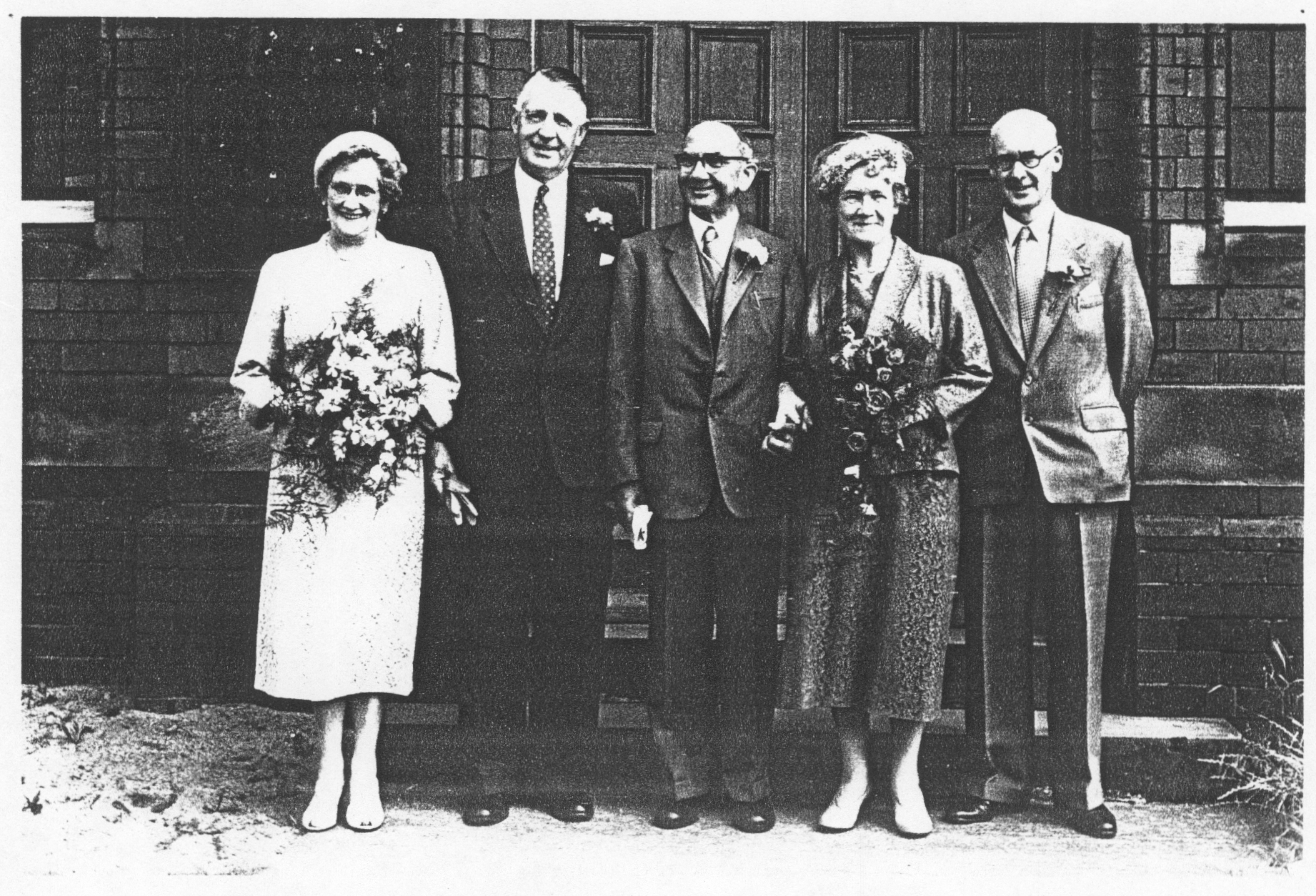
Some time after that, we had another letter (I presume) with the astonishing news that Uncle Arthur was getting married, for the first time, (or had done so) at the age of 76! This event took place on . He married a very warm, sweet, lady who had served in India as a missionary. She had also been the headmistress of a school in Goole, I think, and her maiden name was Scowcroft. Uncle Arthur brought her over to see us. Mother provided tea and home-made cakes, as was her wont, and fussed around, and Auntie Elsie (as we came to call her) said, remarking on the hospitality, "We're surrounded with love!"
But such a gentle, though capable, person Uncle Arthur was! Colin, who would be 11 or so, met them both once or twice at Mother's about 1967, and he had some problem with a shoe, and Uncle Arthur (being an expert on leather of course) looked at the problem helpfully. I think he took to Colin.
When Uncle Arthur and Auntie Elsie married, they moved to Rawcliffe Bridge, which is up-river from Goole, and we kept in touch: (Swinefleet is down river, some three miles from Goole).
Some years later, Elsie died, I think of a heart attack, and the shock led to poor Uncle Arthur having a stroke in 1972, and after that he remembered nothing of the immediate past. He died in hospital in August 1975 (Laurie Lister thinks) when he would be 93 years old.
Uncle Arthur and Auntie Elsie told us they had been doing some research into the Gringley family, but what happened to this work I do not: know. One fact that emerged was that one member of the family had been buried outside the churchyard, for whatever reason.
Talking on the phone to,Cousin Donald about the Gringley and Wild families, on (which happened to be the centenary of dad's birth), he said he and Auntie Lily and presumably his wife Lorna had visited Swinefleet and Goole and also Norton near Doncaster when Auntie Lily had the flat at Ilkley, (and Donald of course had a house there) about six years ago, i.e. 1989/90?.
There were no Gringleys in the phone book but Swinefleet being a small place they made enquiries and got talking to a butcher, who remembered the Gringleys. The house ('by the river' Donald said, though I don't remember it being immediately by the river, although it must have been near it) had been demolished, the butcher told them, but the saddler's shop in Swinefleet was still there, and they saw it. From Laurie Lister's photo the shop had been converted into a room of a house. I told Donald we had visited Uncle Arthur and Aunt Nellie at their house in Swinefleet in 1953 and there was an outside toilet, but the house though rambling, was nicely kept and the garden very neat.
Auntie Elsie I think the butcher remembered. As well as being a former missionary, she was a teacher (possibly headmistress) at Goole Grammar (?) School. (I had forgotten this) We were trying to think of her maiden name (the butcher evidently didn't remember it). I had certainly heard it though Donald may not have done. I wondered later if it was Scowcroft, and this is confirmed by Laurie's mentioning Elsie's nephew, Granville Scowcroft. I had the feeling that it was a good Yorkshire name!
I told Donald about the note of Gertrude Alice and my uncertainty who she was. Donald thought there was some relation 'up your way'. I told him I'd written today to the Listers at Southport (if they are still there.) He said, "Yes, Southport's your direction" !!! Later that night I found a reference in an account of a holiday of dad's to going to Fleetwood to visit his aunt. This rather rang a bell, and I think I remember now dad's talking about Aunt Gertie, possibly at Fleetwood, and Laurie mentions grandma visiting Fleetwood, so I presume Fleetwood was Aunt Gertie's home.
Donald said he has a photo of the house at Swinefleet. He mentioned that there is a village on the Nottinghamshire border called Gringley-on-the-Hill, which I knew. He said it is a pretty village. I had discovered it on the map and looked it up in a gazetteer (possibly Arthur Mee's book) and I have a note of the quotation in my Prose Quotations book. It has quite an old church, but of course this would be C of E and the Gringleys were staunch Methodists.
The Wilds
Matthew Wild (grandpa) was born on the at Swinefleet (and I think Elaine has a copy of the birth certificate or at least the details). His father was also called Matthew, and was a farmer. His mother was Sarah (formerly Sykes). They had a farm called Westfield at one time, and at another, one called West End Farm. Donald and Lorna traced West End Farm, but found it was a modern bungalow. They spoke to the owner, who rather apologetically said he had bulldozed the old farm - and put the rubble and wood down the well only a year before. So they must have had a well. He remembered that an unmarried girl of the family had had a baby - but he (or Donald) didn't want to pursue that!
Matthew (Senior) and Sarah had a large family. Mother had a note of their births:
| George | 22/11/1859 |
| Richard | 31/10/1861 |
| Thomas | 16/12/1863 |
| John | 7/5/1866 |
| Sarah | 22/4/1868 |
| Matthew | 19/6/1870 |
| Edmund | 2/4/1875 |
| Samuel | 19/1/1878 |
I have an old photo of 'T. Wild' dated 1885 when Thomas would be 22 years old, which seems to fit in.
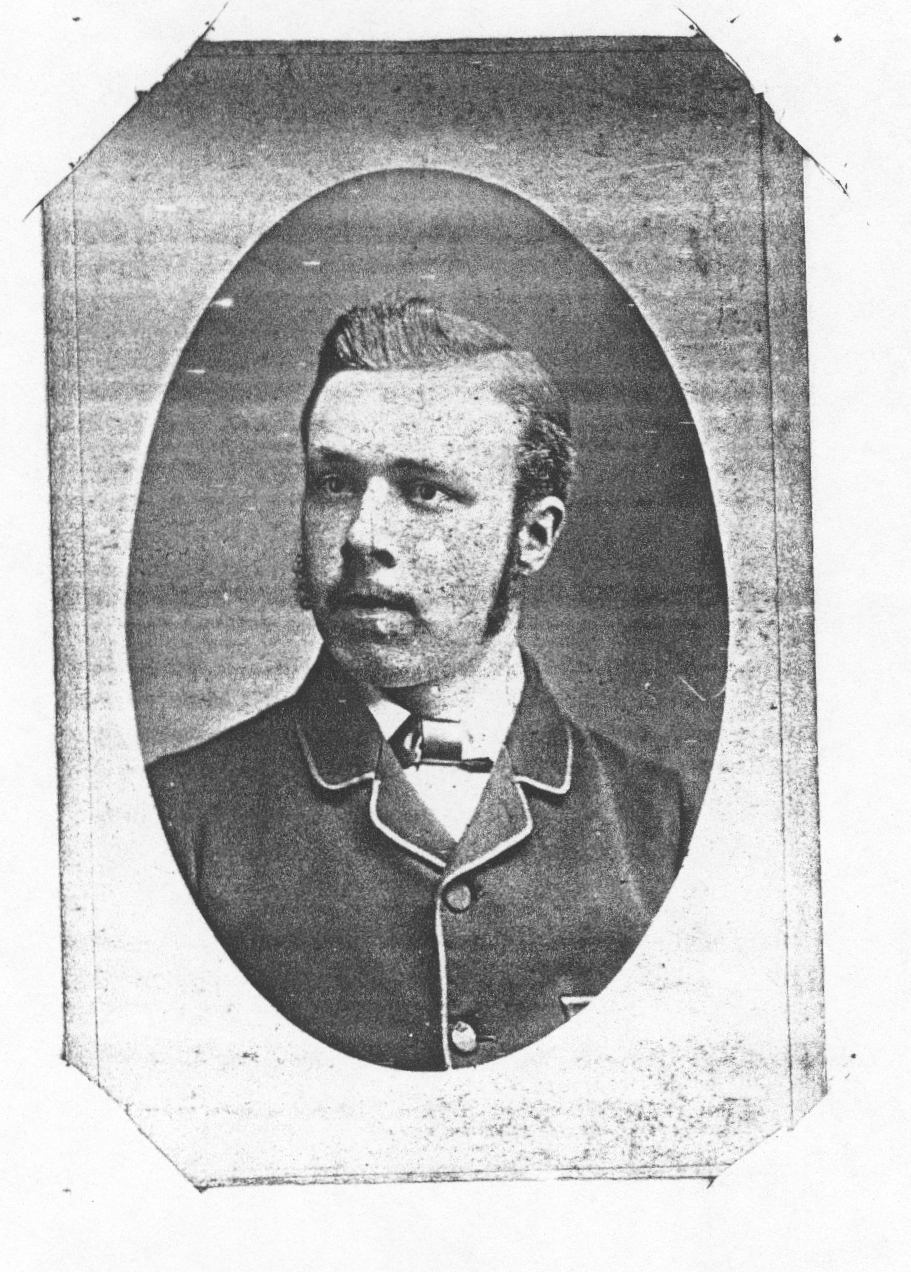
Asking dad years ago about his family I feel sure I found I had a Great Aunt Louisa, as well as Sarah (unless this was the name she used.) In fact in dad's account quoted later he mentions Aunt Louie, but it is possible she was the wife of one of the sons. Sarah must have felt a bit isolated with seven brothers! I also had the childish impression that the brothers were Matthew, Mark, Luke and John and others but evidently this was not so.
I don't remember any of the brothers but in the late 1930's Great Uncle Sam certainly came to 128 Burnage Lane Lane, our home at that time. I remember mother telling me about him. It was a time of several funerals in the family (no doubt the occasion was a funeral, possibly Grandpa Wild's). Great Uncle Sam was a character and made the rest of the family gathered there laugh, despite the sad occasion.
I have a photograph of West End Farm and Donald too has one and says that this is not near Swinefleet, but it Norton, near Doncaster. (I found a reference to Norton in the papers I have.) One or both of the farms was at Norton. Since at his marriage Matthew was stated to be from Swinefleet it seems that Westfield Farm may have been at Swinefleet. A note on the back of the photo of West End Farm in my writing, taken from mother's information, says '(Grandpa) Matthew Wild's home till marriage.' I had always understood the Wilds lived near Doncaster, but mother told me, no, it was near Swinefleet. In my note of Matthew's marriage he is said to be of Swinefleet. Possibly if his family's home was not there he was working there as a joiner?
Westfield Farm is mentioned in an account of dad's about a Visit there in 1911. Donald said that Westfield is still standing and is now an old people's home. It was a big family home (theirs was a big family!)
Donald said the Wild family were farmers and the area has both farming and mining, so I told him about dad's Uncle Sam. Dad used to tell us that Sam (or at any rate one of the brothers) had a job in the coal mines where he used to work nights. During the day he worked as a carter. Dad reckoned that Uncle Sam (if Sam it was) used to sleep in the mine part of the time and that way he was able to manage two jobs (and two wages!) Donald said there are a lot of Wilds in South Yorkshire, and certainly a great many round Norton. He reckoned they were all our relatives!
Cousin Peter kindly passed on to me an Indenture for Matthew Wild (Grandpa), of which Elaine has details also:-
Matthew Wild of Swinefleet in the County of York with the consent of his Father Matthew Wild...doth put himself Apprentice to George Leetham of Laxton in the said County of York, Joiner and Wheelwright to learn his Art and with him after the Manner of an Apprentice to serve from the day of the date hereof until the said apprentice shall attain the age of twentyone years....and the said George Leetham doth hereby for himself his heirs executors administrators and assigns covenant with the said Matthew Wild the Father and also with the said apprentice that he shall teach learn and instruct or cause to be taught learned and instructed the said Apprentice in the Art of a Joiner and Wheelwright.... the twentieth day of August...One Thousand Eight Hundred and eighty four.
Signed:
Matthew Wild
Matthew Wild
George Leetham.
Grandpa would be 14 years old at this time.
Matthew and Emily's family
From Grandma Emily's Bible (now in the possession of Dorothy) I learned that Matthew and Emily's first child, a girl, was stillborn on at 12.30 noon at Purston Nr. Pontefract, and buried on Saturday at North Featherstone Cemetery. Looking at the map later, I find that Norton is half-way between Pontefract and Doncaster. Purston, where the stillborn baby girl was born is marked on the map very close to Pontefract.
Donald said Matthew came over to Manchester to find work - he didn't know when, but it must have been in 1895.
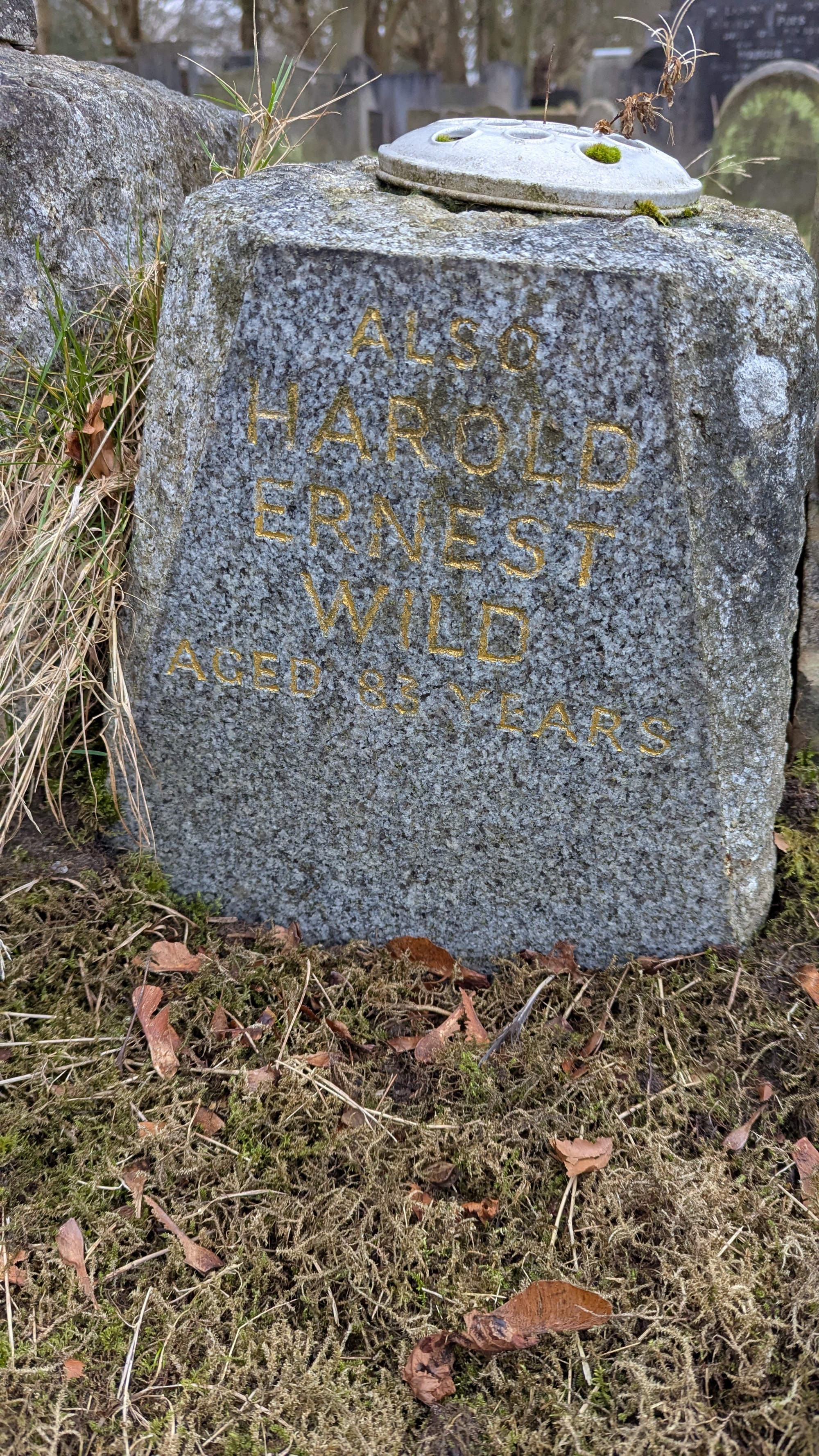
But on Friday, at 4.25 a.m. Harold Ernest (dad) was born in Gorton, Manchester, so they must have moved over to Manchester some time before. Dad was born (we think) with a dislocated hip,and so was always lame, or it may have been as a result of a fall from a pram. Because of this he slept in a hammock and probably spent time in it during the day for several years. Later he had a pair of crutches. Eventually he was taken to see a bone-setter, Alexander Rae in Blantyre, Scotland, and he strongly advised dad to use his weak
leg as much as possible in order to strengthen it. This dad did, and it led to his great and abiding passion for walking and rambling - he walked remarkable distances and in adult years even climbed Crib Goch on Snowdon, of which feat there exists a photo somewhere.
It is curious that my maternal grandfather, Joseph Broome, was also lame (through a childhood accident with a horse and cart) and he also consulted Alexander Rae.
There is also somewhere a postcard photograph of dad aged about 12 with crutches, in a street scene of Swinefleet.
To return to Matthew and Emily's family:-
Lilian was born on Thursday, (Trafalgar Day) at. 9.55 p,m. Miriam was born on Wednesday, at 9.15 a.m. Bertram (Bert) was born on Tuesday, at 2.00 p.m. and Gladys was born on Monday, at 2.45 a.m.
Bert's wife Lily, once asked Grandma why she had called her son Bertram (a name she didn't think much of). "Because I liked it!" was the immediate answer!
I will revert to the stories of these members of the family later on.
Dad's early years
When Dorothy and I were young we used to love to say to dad, "Tell us about when you were a little boy," The story I remember best was the one about when he played 'White Rabbit' along with several schoolmates. They knocked on various doors, and ran away. One of the doors was that of the local barber. The barber came to the door and all the other boys ran away, but dad, hampered by his lameness did not get away fast enough on his crutches, The barber collared him and took him inside the shop. Dad was very apprehensive about his impending retribution, but this turned to stark terror as the barber reached for his razor strop and proceeded to sharpen the cut-throat razor in general use in those days.) The barber pointed out the error of dad's ways and finally let him go (unharmed). But it was an incident dad never forgot.
Other children of course teased him about his lameness and frequently called out "Awky-duck, awky duck!" but dad would retaliate by throwing one of his crutches after them. I have already mentioned the photograph of him in a Swinefleet street scene with his crutches, and there is also a photo of him at his father's workshop aged about 9 or 10, again with crutches. His father worked as a joiner for the corporation, in Gorton I think.
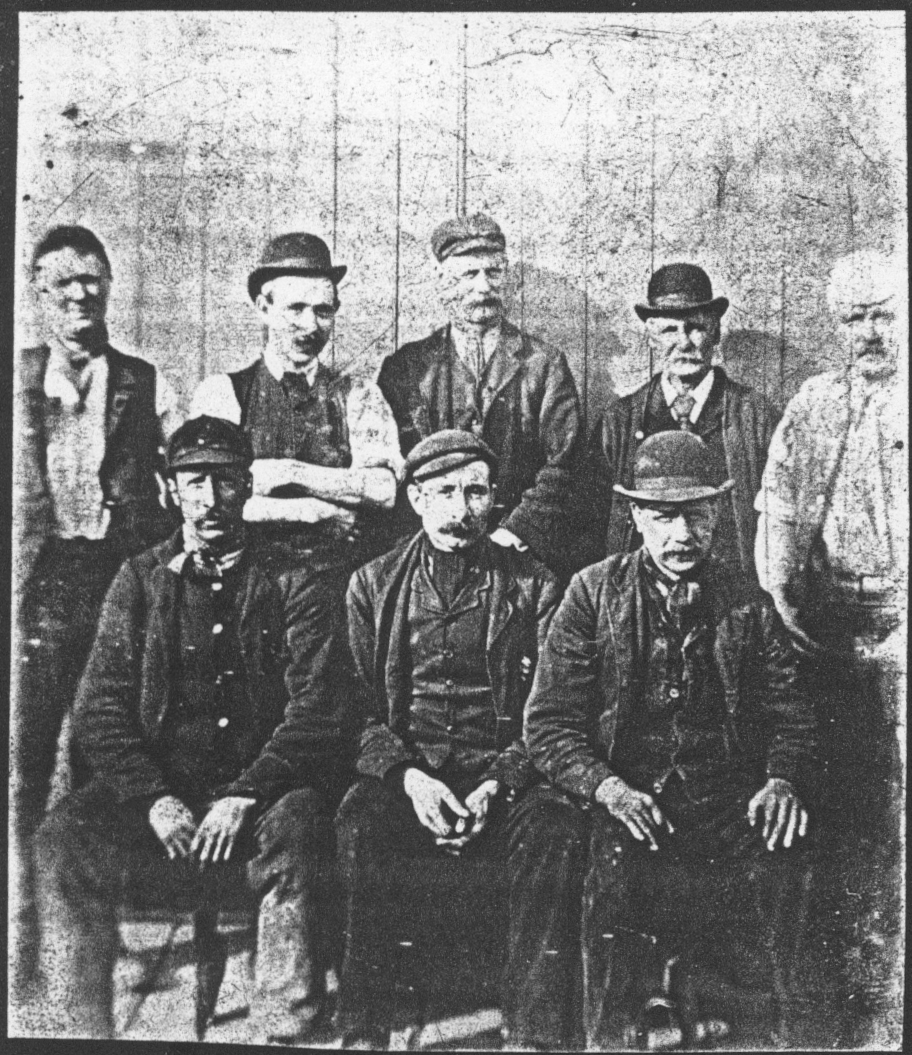
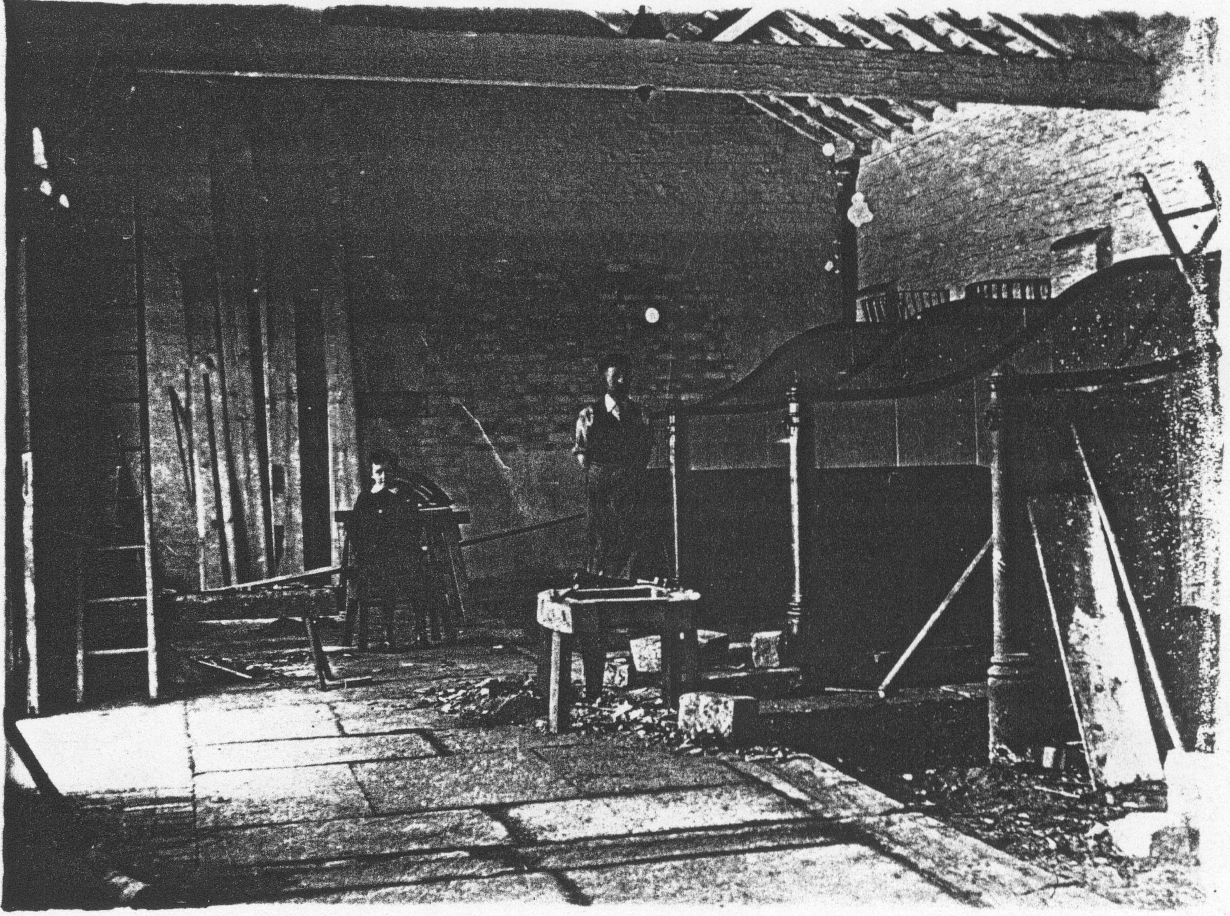
In his late teens, I think, dad was able to dispense with the crutches, but wore a specially made surgical boot. Children were often fascinated by this, and in later years he never minded their curiosity and would explain why he needed it.
When, in his 60's or so, he had one of the earliest hip replacements and a steel pin put in his leg by Mr. Charnley, the great pioneer orthopaedic surgeon, at Wrightington Hospital, it was like a miracle to Dorothy and me, as dad was much less lame than we had known him all our lives (his leg in effect had been lengthened.) Indeed it took us some getting used to, as well as dad. But he used to hop on it delightedly, just to show that he now could.
When I was very small, dad used to carry me on his back in a kiddy-carrier, and I enjoyed the gentle up-and-down motion caused by his lameness. I will leave that subject now, and consider his life in other directions.
I think the family must have moved from Gorton early on, to 20 Slade Grove, Longsight. I think the barber episode took place at Longsight, if I am not mistaken. The family lived at Slade Grove for many years until the death of grandma in 1936. In recent years I believe the house has been occupied by some Pakistanis (of whom there are many now in the district), but at is still standing.
Dad went to Stanley Grove School, Longsight, and later to Ardwick Higher Elementary School, now Ellen Wilkinson High School. Indeed, Ellen Wilkinson herself was contemporary with dad, and he knew her at school. She was a fiery redhead, and later became an ardent member of the Labour Party, particularly in the North East of England, and did much excellent work.
I don't know much about dad's early life, except that through force, of circumstances he was very close to his mother, though he Sometimes went with his father to lectures or to other chapels, or indeed with his mother.
I have several of his diaries, though not apparently the first one. There is a book in which he wrote down poems of other people, and some of his own. From the handwriting it was written at various ages, some in 1911 when he would be 15, and some evidently before this. As I grew up, he would often say to me, perhaps when I too was copying out poems I liked in a notebook, "You remind me very much of myself when I was young." We are both essentially quiet people, and if the two of us were at home together, we would each pursue our individual occupations of the moment in companionable silence. Both of us are rather methodical, and are given to writing verse. We both love the countryside and the beauties of nature, (as his experiences at Keswick show.)
Dad kept various notebooks and cash books meticulously (and I too keep a cash book.) In the front of dad's Diary No. 2 are various accounts such as the delightful entries: "Collection morning 3d. collection (night) 3d."and then of course there was "missionary money ½d." No doubt we have other traits in common!
There are other interesting, revealing and amusing items. (This was 1911.)
Income apparently:-
| From E. Fairhurst | 3d | |
| From father Lily found 1d | ½d | |
| Money from post-cards | 3d | |
| Old debt from mother | 11½d | |
| Allowance (weekly) | 1.3 | |
| Extras (a repeated item) | 1.11 | |
| From Grandma (Wild?) | 3 |
Expenses included:-
| Fretwood @ 4d per sq. ft. | 6d | |
| chips | ½d | |
| Rly ticket to Marple | 6d | |
| ice cream | ½d | |
| Tea at Marple | 6d | |
| Shares with W.A. @ 1d drink | ½d | |
| 8 Ginger beer ⅓ of 1½d bottle | ½d | |
| Elsie Fairhurst Postcards | ½d | |
| Mother borrowed | 1.5d | |
| Rode home | 1d | |
| Evening News | ½d | |
| "Fretwork" (Magazine) | ½d | |
| Inkwell from Lily | ½d | |
| Unaccountable for possibly lost at Belle Vue | 1.0d. | |
| Lent mother | 6d | |
| 1d stamp | 1d | |
| Liqorice Allsorts | 1½d | |
| Girl at Doncaster | 1d | |
| Train to Norton | 7½d | |
| Collections | 2d | |
| Ginger beer | 1½d | |
| Toffee | 1d | |
| Doncaster Tram | 1d | |
| Deposited in bank | 4.0d | |
| Pair of braces | 8½d |
One poem in two pages of painstaking schoolboy handwriting dated Christmas 1911 is entitled "My Farewell to the Mission Sunday School," which he had evidently attended for 8 years. There is a rather pointed note which says that as the new secretary had arranged the programme for the concert, his lines were never recited!
But in June 1911 (Whit Week) probably the most memorable event of dad's early life took place. He loved to tell us about it. He was having four days' holiday at Keswick with his Aunt Esther. Someone had made the suggestion of walking up Skiddaw to see the sunrise. Harold asked permission from his aunt, and she said if he had a rest in the afternoon he could join the party.
To quote dad's own words which preface a poem, oddly enough praising Longsight, Manchester, as well as Keswick, :-
: "On the Whit Friday morning about 3.30 a.m. I was one of a party of six standing on the summit of mt. Skiddaw watching for the sun rise. Our hopes however were doomed to disappointment. It was in fulfilment of a promise to my aunt that I composed the verses, which were written in a spirit of thankfulness to my aunt for her kindness to me, and to God for the beautiful weather by means of which I realised as never before, that "The heavens declare the glory of God and the firmament showeth his handiwork" and as I walked on the road to Thirlimere, as I Sat at sunset, on Friars Crag in the shade of the trees, listening to the melody of the birds in the branches above me, and my eyes resting on that never-to-be forgotten scene - calm Derwentwater at the sinking of the sun, or as I beheld the pure and beaming lantern of the night on my way up Skiddaw in the exhilarating influence of the sharp wholesome mountain air and at every turning back of my head catching a fresh glimpse of the moon through the open spaces between the trees, lonely and monarchal in its matchless beauty and then dropping my eyes to the wonderful reflection, motionless in the lakes below and bounded by the still, dark and impressive mountain heights of Cumberland it required no David to tell me that "Day unto Day uttereth speech and night unto night showeth knowledge." In fact I felt the love and power of God. The verses are poor to mention such a place as Keswick but they bring back to my mind recollections of four of the happiest days in my life. John Ruskin spoke of an early visit to Friar's Crag as the first thing he remembered as an event in life. I would say on similar lines that the last thing I would forget of my early days would be my holiday at Keswick.
I'm glad once more I stand
On Longsight's level land,
Healthy and bright
Though still I'd like to be
'Mid Keswick's quiet glee
High up the mounts to flee
At dead of night.
My thoughts are with you still,
From e'en the pencil mill
To Skiddaw's crest
Your pretty lake, so gay
With fash and boat array
To charm a holiday
With joy and rest.
But, ah you fall short here
I say without a fear
Of any doubt.
Our cars you cannot beat;
Our schools you cannot meet;
Our shops in Market Street
Would wipe yours out.
Our public libraries stand
All round on every hand
Helpful and free
And our best parks would show
That all our head men know,
We need some place to go
In liberty.
Thus many a piece of ground
Has our town council found
And banished gloom
So now our town can boast
Of parks with Swings in most
Of lakes and many a host
Of flowers in bloom.
I am sure that one of the last things dad remembered from his early days was his holiday at Keswick.
Dad had started work the previous autumn on , aged 14 in the office of the Policy Holder Journal Company, and seemed to be fairly well thought of. Spare time is taken up with the Mission, doing fretwork and taking the Fretwork Magazine, later superseded by 'Great Thoughts', reading many chapters of the Bible and other serious books, going to baths, attending night-school, where he studied Arithmetic, Book-keeping, Shorthand and Correspondence, doing exercises, learning to play the piano, occasionally writing verse, and conducting a campaign of getting up early, 6.00 a.m. and sometimes 4.00 a.m., mainly to read. He notes the time he rose each day in his diary.
There is a line of shorthand against which I have interpreted as "Mother said she would like to know what it is that I have written in shorthand." '! Grandma couldn't decipher it but I have!
He became so fired with enthusiasm for this early rising that one day he determined not to go to bed at all, but to remain in his clothes in a chair downstairs. However, this only lasted one night - very likely his parents put their foot down! This is one facet of dad's character that I do not share - a liking for early rising! However, I do share his love of occupying every minute. In his lunchhour he often visited the Art Gallery (as I sometimes did when I worked in the centre of Manchester.) One day he played what I think was a dreadful trick: He says: () "I got father to call me up so that I should not be later than usual in getting up, and Mother got up as usual to get me off to work and by 8.15 I was ready for a good read, which I had from D's L.B." (Dulcie's Little Brother)"and then acquainted her with the fact that I had not to go back to work till Tuesday morning." Perhaps to occupy him better his mother "gave me a parcel and father 3 tea tickets for youngest children, to take to Mrs. Doodson. I went inside and saw the poor dying woman. With continual gaspings for breath she told me she had had a very bad night and was worse today."
Dad was devoted to reading and on he says, "I had an hour or two to devote to reading: Miriam and Berty were a little noisy and father was busy hammering. Wanting to be quiet I gained permission to go in to the " (an omission)" "if I used a candle and not gas. So with my hat on: an order to keep a scrap of paper in place as a shade from the direct light of the candle my thoughts soon travelled 'With Stanley on the Congo'."
He also wrote his diary from (at least) June 1911 until March 1920. The ones I have go up to April, 1913, and Dorothy has the rest.
Church activities
He attended the Mission regularly. (As already mentioned, he had been attending for eight years). Probably all the family went there, but I believe eventually Matthew had some disagreement with the Mission folk, as evidenced by dad's entry for : "Came from nightschool with Moorhouse and Mason. The latter asked me whether I had left the Mission and whether I was going to go to the s.s." (Sunday School). "1. told him it was a case of "What father says is law."" I think the Mission they attended was in Levenshulme.
Afterwards they attended Rusholme Wesleyans on Dickenson Road, where dad first met mother. Sometimes his mother or his father would go with him to the Methodist Central Hall, or to other Methodist chapels, such as Grosvenor Street. He attended Class at chapel regularly, and there were chapel concerts, and even a play. Later on he began teaching in the Sunday School, and joined in church outings, to Marple and Strines for one, in July with an open air meeting. "It was beautiful, especially during prayer with the breeze rustling the leaves above our heads and the birds sending forth their peaceful song." On another occasion they went to Poynton Park and Poynton (when three girls and a number of lads walked the whole distance from Rusholme to Hazel Grove.) On this outing dad most of the time walked between two sisters "who were much interested to hear how it is thought I became lame and my operation also my walk round Thirlmere and up Skiddaw and the previous year's Whit week treat at Middlewood. Through this, there was. scarcely any chance for Jessie Carter to play a part in the programme though I was of course asked about her when I got home." His sister Lily in particular used to tease him about this girl, who, it Was said, had a fancy for dad.
At Whitsun (1912) on there was a scholars' trip to Poynton and Lyme Hall, by train. "After dinner (which had been brought with us) we played tips and then set out for Lyme Cage....We went to the top of the cage (being the second time for me.) This time however I was much delighted by the way we came, just past Lyme Hall with its beautiful fountain and the deer we passed not far from the hall. We came quite close to them and they did look nice being free to roam as they liked over the park. I was also struck by the beauty of the trees."
Another Scholars' trip the same week, , was to Conway by train leaving at 5.55 a.m. necessitating rising at 3.30. They had a boat trip and later walked to Penmaenmawr by the Sychnant Pass, passing some territorials having a mock battle. Later they went through the Fairy Glen which particularly delighted dad, and later he paddled in the sea - he thought for the first time.
Knutsford to Lower Peover was another destination. On the Whit Monday before the Lyme expedition, there was an excursion to Millington and Rostherne. "Charabanc leaves the school at 9.00 a.m... Wilfred Tysoe amused us all by getting off now and then and running at the back and the sides. Occasionally he stepped on the road of necessity for mischievous ones took a delight in knocking his hat off and one time he had to do a good deal of running before he caught up to us." (They played cricket and walked to Rostherne Mere). "A 9d tea at the farm was followed by a game of cricket then about 7.30 we were on the homeward move. My three pals had stayed behind a little and they had a good run down hill. We all stopped however as it was found that three were missing. These missing ones came and the horses again started... At first I was sat at the back but thought I would enjoy it more to get' on the steps with W. and H. I did so and we had a splendid time, singing the Whit-week and other hymns."
Things were not always quite so strait-laced as we might imagine: On Dec. 30 1911 was the Mission Sunday School tea and concert. Later on, "When a lot of the younger ones had gone home games were started but at first all in confusion. Harry Huxley and myself refused to join them at first and I could see they were anxious that we should fall in with them. However the ring started off successfully at last, the other lads joined in and we enjoyed the fun of watching who was picked and by whom and the inclination which each had to the exchange of a kiss many having to be brought together by force. I joined with them in the end leaving Harry. I had a really jolly time and was married 2 or 3 times to Ada de P. Also I had a gentle smack at Gladys Leigh and also found myself with "Shinio" who as usual took a good deal of getting at, and Albert Maskery held her while I just managed to get at her face."
On the Annual Christmas Party for the elder scholars took place, during which a sketch was presented. On Dec. 30 dad tells us "Noon: I went out and bought a moustache for use in our sketch." On the day he says "I had hoped to get to tea at 6.30 but as I had to prepare my moustache, with the letter for use in our sketch and fix my medal on my chain and suchlike it
Was not until 7.30 that I left for the car to Rusholme. They had not started our sketch (which came first) when I arrived. We went through our sketch very well. Sofia (Alfred Bowden dressed as a girl) charmed all. As soon as Sofia entered many were a little puzzled, thinking they did not know her and yet her face seemed 50 familiar. Some recognised the face and loud applause immediately ensued. The Rev. Paul Powis (Sam Beck) looked splendid and took his part off very well, as also did Aunt Patience (Miss Harison) and Robin (Wilfred Tysoe)....Alfred was the only lad who could have taken off a girl successfully. We had only one who by his somewhat rough looking features could pass as a farmer, and that was Wilfred. 'Sam Beck was tall, his voice and gestures well imitated a minister." It sounds great fun. Sam Beck, of course, later married dad's sister Lily'
One Sunday, , dad writes, "Night: Father advised me to go to the new Congregational Chapel in. Burnage to hear Rev. John McNeil. I found it to be a very cosy chapel and it was full." 'Cosy' is not the word I would have used to describe the chapel!
Many years later, when we lived in Burnage, I was baptised there, and went to Sunday School as a young child and a 13-year-old, and used to attend the church there, as did Dorothy, more than I. Norman and I were married there on and Colin and Elaine were also baptised there. A fire some years ago led to a refurbishment of the church, but only last year it had to be demolished due to water damage at the time of the fire. Norman and I were very pleased to attend the dedication of the rebuilt church last year (1997). It was a very sensible modern low building, much smaller than the former church, but the congregation is still warm and lively and caring.
On , dad went to the (old) Free Trade Hall where the M & S Mission Anniversary was held. "I doubt whether I have been in a more brilliant meeting. The President was first speaker (F.L. Wiseman), then came some splendid words from the chairman. Gypsy Smith spoke - practically the first time I have heard him speak. I shall not soon forget him."
He heard him again on : "Rev. Wm. Goudie and Gipsy Smith who are having a month of special meetings together paid their visit to Manchester... At 7 o'clock I was in the Hall (Albert Hall) half an hour before starting time. The hall was not quite packed. Rev. W. Goudie gave the first address, lasting about ½ an hour and when the Gipsy commenced by saying 'You have listened to a great speech,' he spoke very truly. The Gypsy's speech lasted the same length of time. He had the people laughing heartily time after time but he knew also how to sway his hearers on serious lines... The Gypsy sang twice. A very sweet voice he has, the first time I have heard him use it in song. When the collection had been counted and all settled he struck up 'I need thee every hour' and pleaded for those who had not yet found Jesus to stand up and he would pray for them. Five or six did stand up. It was a memorable night and I hope the enthusiasm it kindled in me will not die down."
As I have said, dad started work in September 1910 and a year or two later he tried to get a job in Manchester Town Hall. He was unsuccessful, and rather disappointed and remained for the rest of the year at the Policy Holder Journal Company. However he felt that God was encouraging him to take a decision to go in for the ministry .
He kept this resolve in mind for some time, and in January 1913 after consultation with Mr. Parry (a church leader evidently) he went with him "to Chetham St. and to Ladybarn to open the preaching service in each case, giving out the hymns and to offer prayer and read the lesson. And when he (Mr. Parry) "left the circuit he would get me a preacher's note he said."
Dad had as customary at the Wesley Guild given various 'papers' on different topics from time to time, including one on Prayer, , when he was 16. So I think, on occasion, did Dorothy Broome, who later became his wife.
He was a rather serious young man, (though as we have seen not averse to a joke or two) and devotes half a page to decrying the evils of the cinema. However it is rather amusing to read, as a preamble to this, ", (1911). At night went to (Longsight) Wakes with W.A. and J.M. - W.A. treated us into the Cinematograph show on Cowboys and Charles Peace. Had he not paid I would never have gone in." ! But he modified his ideas somewhat by when on holiday at Colwyn Bay, "I went in the "Cinema" at night through the weather. It is marvellous the perfection which the Cinematograph has been brought to."
To return to dad's call to the Ministry: there is not much more in the diaries in my possession on the subject, but I believe he did preach on at least one occasion. His sermon advocated Pacifism - the idea of killing other human beings was anathema to him. The sermon went against the patriotic fervour of the time (approaching the 1914-18 war) and the authorities (church authorities I presume) were not happy with dad's attitude, and so he was asked, or forced to give up any idea of training for the ministry, or indeed he may have been unwilling to support a church with such an attitude.
By the time of the second world war, dad had modified his views to some extent, and very reluctantly agreed that this was a. 'just' war, though he didn't wish to support any efforts, fund-raising or otherwise, for the war machine.
Dad quoted in the 1911/1912 diaries one or two interesting conversations with a Mr. Campbell. I am not sure whether this gentleman was a colleague at work (many discussions take place at work!) or whether he was a speaker at the Methodist Guild, or whether in fact there were two Mr. Campbells, which seems possible as some of his opinions were dead against the church, and others were not so:-
": Mr. Campbell had no definite subject - he had a sample sheet of yellow paper in his hand of German make, which colour the Germans he said did not care to use as the dye spoilt their streams. Then he brought in the present condition of our own waterways - ruined by mills and dyeworks - mentioning Gore Brook. Mr. C.E.W. mentioned that the dirtiness of the river at Roman Bridge Marple was wholly through the Strines Print Works. Mr. C. then spoke of a German invasion. "It was not to come" he said, "It had come", and he then said two of the leading military men were Germans and also the Manchester Lord Mayor (Behrens)."
": Splendid talk on the wasted water in W.C.s by Mr. Campbell. He said the Bible was good in some things and the sooner we got back to the earth closet the better as described in Deuteronomy. It would cause inconvenience but he said the soil mixed with the refuse would be just what farmers are wanting."
": Mr. Campbell again repeated-as he has often done before his firm belief that as things are now proceeding a holy war will not be an impossibility - Muhammedan v. Christian. He uttered some awful words against God, and against religion. He said Mahomet is dead Christ is dead. God cannot see you. He cannot hear your prayers." This was obviously not a church- oriented talk;
": Mr. Campbell on ill and dying people he visited lately, particularly his sister in law, and on the tube railway (a Daily Mail placard stating: Tube railway for Manchester - £1,000,000 scheme)."
Family events 1911-1913
August Bank Holiday week 1911 proved to be quite eventful: On , Bank Holiday, instead of a 40 mile walk and ride as intended, he joined his father and others on a relief train to Liverpool, by boat. to Seacombe. "Seacombe to Hoylake by railway. Had picnic and walked to West Kirby along the beach and back to Hoylake (1 mile) a delightful walk. I only paid father ⅙d. the full complete travelling expense being 3/3 each
: "Bertie started work at Horsefields." Bert would only be 9 years old at this time, and I do not know what kind of work it would be - perhaps delivering newspapers . : "Grandma Gringley died at 2.30 p.m." This would be Grandma Emily's step-mother. I have not yet discovered her name.
, "Mother and father went to Goole for tomorrow, going today on account of the possibility of the strike rendering travelling almost impossible tomorrow. I had indigestion all day I believe through having a large quantity of bacon for breakfast (Annie Street looking after us) - Father had a clear passage home (coming to Victoria Station) arriving home at 10.10 - 11 o'c."
": (1911): Mother should have come home but not a single train arrived in Victoria Station while father was there, on account of the strike."
": Mr. Burgess last Saturday gave us a ticket for Railwaymen's Sports at Belle Vue, so I went at 2 o'clock. Very fine running and cycling and amusing walking. Thomson Mackay's men I think did the best at tug of war. Last of all perhaps about 50 men (100 expected but probably strike interfered) had a tug of war with the elephant. Twice the men were victorious causing the elephant to simply step backwards (not dragged) but the 3rd time the elephant tried and walked on pulling the men behind it. Went to Uncle Tom at his box and got on the stands, there meeting Percy." (his cousin)." After fireworks shared bottle of Ginger beer with Percy out of Uncle's cabin, and we then went on figure 8 railway." (Uncle Tom worked at Belle Vue on the stand.)
": Letters from Aunt Louie and Mother. Mother and Baby" (i.e. Gladys)" arrived home safely."
": Sent letter to Aunt Louie."
": Wrote letter to Uncle Sam at noon re spending 2 days of my holiday there."
": Got letter from Aunt Louie - Frank ill in bed - no holiday for me there, also that Grandma was ill." (This would be Grandma Wild.)
": Morning, prepared to make fretwork arts. for Uncle Sam but recd. letter saying I could not go as they were off to Blackpool, later in day though recd. a letter from Grandma to say I must go there."
": At night wrote to Grandma's and Uncle Sam's."
": Methodist Recorder had an a/c of Grandma Gringley." (I wish I could obtain a copy of this.)
" Bought 2 1b. liquorice all sorts (8d.) I had 1 ½d mother ½d and the rest for Westfield - Got bathed at night and packed up for holiday."
-9 Holiday at Westfield, Norton.
: "1.30 London Rd. Station ½ day Excursion ticket to Doncaster (2/6) changed at Sheffield - arr. at Doncaster at 4.20, ½ an hour after I had expected, thus missing the 4o'c. train to Norton for which Aunt S. had waited at Norton Station. I went to: Aunt Louie's, had some tea, a little girl showed me a near cut to station and I caught the 6 o'c. train. Station Master at Norton said they had been with trap and that I must go to the Royal Hotel (I found after, they had not told him so) I went along with a family (walking) to the Royal where they knew nothing of my coming. They said (Uncle) Eddie would be calling so I waited. I wrote a card ready for posting home. I very much enjoyed all through the week the jolly 'twang' of 'these plain children of the field', especially in the train. I read part of an address in :The Greatest Thing in the World' in the train. I was much benefited in the Royal by what one of the many men inside said loudly. He said he respected every man he knew, he respected the poorest most miserable man he knew, just as much as he would the mightiest toff or millionaire in the world if he knew any such. Honour to these 'plain children.'. Uncle E. came shortly before 7.30 and told me the way though I could have found it myself. - Rabbit pie for Supper - met Aunt S. near 4 cross roads (nearest Westfield).
read Bible - beautiful scene at crossroads, went to Uncle George's. On my way read Drummond's Book Chiefly re Cor. 13. It was one of the pleasantest reads I have ever had. Went with Uncle G. to Askern Chapel. Text; "Ye are the salt of the earth" etc. It was a long walk but grand fully 14 miles. It is longer than it used to be, the pit people who are Germans having made the road further round. Five engines are continuously employed pumping water away with the result that the lake at Askern is almost dry and through the foundations being weakened some of the houses in Askern are giving way, large cracks appearing in some of the walls. Read D.'s book again in after-noon and spent some time in garden, Harry giving me 2 apples. West to Campsall Church at night with Uncle G. and family. Aunt S. came and sat on same row. We went back to Uncle G. and then walked to Westfield.
5.15 a.m. Went with Aunt S. on milk round. She said they reckoned it about 10 miles but I thought it would be more. They go through Campsall Norton and Askern and are outside Woe about 33 hours. I was much struck by the conversation of man helping to repair the railway at the level crossing (I think, of Askern Station). An old gentleman passing stopped to talk with him, They were apparently both religious and I heard the man say that no matter what was to be had in the hereafter the pleasure and happiness of having God through this life was quite sufficient to make him believe in Christ. He said this in the ears of the signalman in his box, and a mate. In the afternoon I strolled about the farm yard, and went to see that the sheep were right with Uncle Eddie and Cousin Louie. Coming back from -- met Clarence on his way to Norton to take a cart to be mended with his horse Royal. I got in and went with him. Coming back he got on the horse and I behind him. When nearing Kirk Smeaton I got off and walked as 2 of its bones were making me feel extremely unpleasant. Went out with C. for about ½ an hour rabbit hunting but he did not fire a shot. 8.35 (i.e. bed).
Either 5.10 or 6.10. — milk round — With 2 horses on which we rode both ways we went to a field part of which I saw him plough. At night I went with C. again. When nearly home he saw a rabbit, fired but missed. It ran towards the horses then back. But C. ran forward fired and killed it. After having a glass of milk I went out and was sick. They saw I was white and I went to bed at 8 o'clock. I was sick and had diarrhoea all night.. 6. Came downstairs at 2.30 through 2 wasps visiting me.
- letters to Elsie Fairhurst and Mr. E.H.W. - went on milk round — Went to Uncle Sam's. Watched him trimming the sheep's hoofs andc. At night he came out with his gun and we eventually found ourselves at Westfield. Aunt Nellie came as well with Lucy by the road. When we got in we found Uncle George Cousins Annie and Harry and Mrs. Bruins. Grandma showed her every place and thing she could think of. It was very comical to see these 2 old women chatting and jabbering to each other. I thoroughly enjoyed sitting there amongst the dozen or more in the room. To relieve the monotony of Grandma and Mrs. Bruins it was nice to hear aunt Sally and then when Uncle G. and Co. had gone to hear broad tongued rough-voiced Clarry occasionally break forth in laughter and as I afterwards lay in bed it was simply beautiful to hear the sweet music of the concertina come from his room. Got letter from home with news of passing of exam. I was much gladdened to hear Uncle E. say to the 2 girls "Yes you must say your prayers." Aunt N.L. at noon speaking of where Mother and Father were going said she did not like Longsight. They had too much starch in the collars and where such was the case she said there was not much Christianity.
5.45. wrote home acknowledging receipt of Railway ticket - enjoyable and busy day - went 4 times with Clary for water for Threshing Machine and for horses from Smeaton having to go right round by the road to get it by bucket from the River Went. I rode sometimes on the horse and sometimes on the barrel (which is an old 96 gallon wine barrel). In morning Grandma had to serve out 18 pints of beer and for dinner we had a pie with 3 rabbits inside, 16 having dinner altogether. In afternoon Aunt S. drove C. and me to Houston and we tramped the 5 miles back behind a cow which Uncle had bought for £15.5.0. and which luckily was very quiet, having calved 2 or 3 days before. Threatened heavy thunderstorm departed leaving a little rain on us.
left Westfield 8.15 thus missing a card from Mr. E.H.W. My things were taken in Milk Cart to Uncle Sams. I waited there for him but on his non-appearance I left at 9.40 plus a parcel for mother and a rabbit. I now carried my heavy parcel to Uncle G.'s arriving there a little after 10. We (Uncle G. Aunt A., her mother and I) left in the governors cart at 11.15 and he put me down not far from Doncaster Stn: After sitting ¼ hr. on the station I went to Aunt L. Late in the afternoon I walked out to have a tram ride. It is hard task for the unacquainted to know where the cars stop. However I did get on to have a penny ride, and the guard told me it was so small to the end that he would not charge me, so I came back to the station. Well our cars beat theirs hollow and I told him so. They shake terribly especially when rounding a corner and they are awfully unsafe at the top of the stairs and I could gain no information as to what 2 places I was travelling between from the ticket. Caught the 7.10 train which was late from Doncaster, and thinking I must go to London Rd. I changed at Guide Bridge. Had I stayed in the train which I found I could have done I should have arrived much earlier in Central Station and have been more comfortable."
Back at home
: "Father went to the doctor yesterday and being still unwell I helped mother with washing.
: Lily's birthday (14th) — party: Gladys Leigh, Nora Harrison, Grace Byrom, Doris Dean, Harry Huxley, Donald Kirk, Willie Atkinson, Arthur Hutchinson. We spent a very enjoyable evening together till I think a little after 10.30.
: Noon: raining. Though I made many attempts to keep the fire alive and remake it at work I was entirely unsuccessful proving the truth of Mr. C.E.W.'s statement that if I touched the fire with a poker it was doomed.
: Night: I went to Dr. Salter's about my swollen cheek. He pulled one tooth out and saying the next was a bad one I agreed to let him take that out also. He said I was very plucky. They were both very big ones and it took good pulls to get them out. The blood flowed from the gap most of the night. He told me to come again to let him take some on the other side.
: My cheek being still swollen I stayed in all day while the Anniv. services were conducted at the Mission.
: My cheek being swollen and hurting a little I thought it best to stay in all day and keep warm, so mother wrote a postcard to Mr. E.H.W.
: At night I went with Mother (who cheered me up and told me to go as I felt led and not to mind father's rather harsh temper and such things as "Can't have 2 gases burning at once" when I wanted to have a bit of quiet reading) to Rusholme Chapel and heard Rev. Mr. Vickery of Burma preach.
: Mother received a letter from England & Son, Goole, enclosing a receipt and another paper for signature and in which was Stated that the amount due to each of the five was £350.
: Mother received her money this morning — a little over £200, £142 or 3 having been deducted for settlement of loan to complete purchase of our house. The cheque was drawn on the London City and Midland Bank at London, no bank was stated on it in Manchester and so Mother and Father had a nice tour through a number of banks until at last it was accepted at the Williams Deacons Bank with the opening of an a/c with Mother.
Evidently on the strength of this legacy:
: Arranged to met Mother at Lewis's at 2.45. She got a new "pot" hat Size 7 (3/-) a new suit (19/-) and an overcoat (marked 19/6, the 6d being knocked off). Before this we had each had an 8d plate of fish - after buying my clothes we went into the (Lewis's) Penny Concert - I told Lily last night I thought we should have snow within three days. When we got outside we found it snowing (The first time this Winter)... At Rusholme it was the S.S. Junior annual party and Miriam and Berty went with father. Early in the night father came home telling Mother that he brought a cripple with him. It appeared that after tea Miriam was running about in the school with other girls when either one girl fell and Miriam went over her or M. fell and the girl went over her. Her right arm was broken. Father had just finished his tea and when he heard of it he took her to the Infirmary and had it attended to. Miriam looked very pale when she arrived home and she has to be at the infirmary at 9.00 in the morn.
. My 16th birthday - to work with L.S: - before I got on to Plymouth Grove my old chemistry teacher, Mr. Westerman came up. We shook hands, he inquired how I was getting on and I briefly told him, we again shook hands and he marched on to school. - When L. & I passed by the (Rochdale Canal), on the other side of the road, we noticed a large number of people gazing into the canal but thought they must be merely watching the boats passing as is often the case on fine mornings but there were far more than the usual number looking over and later in the day I heard from Mr. E.H.W. that they were dragging out the body of a man. E.K. once told me that on a number of occasions suicides had been committed at this part of the canal.
. Father for a birthday present gave me very good copy of the New S.S. Hymnal (@ ⅙ less 4½d). He had intended getting me the Chapel and S.S. hymns combined, but he did not think they looked suitable so he gave me ½ towards the Chapel Hymnal and also 2/6 for a reward he had promised on my passing last year's night-school course exam.
. Yesterday, according to the paper, 35° of frost were registered at Dover, the keenest day since 1895... Father and Mother at night went to see a piano and decided to purchase it.
. When I got home from work I found the piano had arrived.
. Looked up one or two conjuring tricks for D.K. (Donald Kirk's) party.
. The harmonium arrived this afternoon from Swinefleet, the carriage cost only being 3/11d.
. At night mother went >with me. I bought a pair of boots (8/11).
: I also prepared my lesson for Sunday afternoon (on the anointing of Jesus from the Alabaster box) and, having a little plasticine upstairs I practised modelling the small brass ornament which Aunt Louie brought from India as I thought it would be nearer the actual thing than the twentieth century scent bottle."
This is intriguing. How did it come about that Aunt Louie had been to India?
: "On waking I found it was snowing. I had my hair cut at the barber's for the first time to my memory and liked it much better than father's attempts. I do not think I have been "cropped" by a barber more than twice, not remembering the incidents then.
: Night: A very interesting hour was passed in the class, after which Victor Greaves and his dearly beloved (Miss Wilson) came up to Birch Lane with me and we had a pleasant chat."
Some years later, I think at the beginning of the war, Victor Greaves married Miss Wilson (Eveline). They were only married a matter of weeks when he went away to war, and shortly afterwards was killed. Eveline became a close friend of mother's (possibly was so at this time) and became a very dear Auntie to Dorothy and myself. She was plump and full of fun. She used to come to tea regularly on a Monday and Eveline and mother would then go on to Rusholme Repertory Theatre (the Rep.) to see the current play. One August when I was about 12 or so, mother and Auntie Eveline had gone out for a day's ramble in Derbyshire, I'm not sure where, and tragically Auntie Eveline fell when climbing over a stile, and fractured her skull, which was said to be thin. Mother and the rest of us were very upset at her death.
Dad reports another tragic event on : "Bertie at tea time informed us that our milkman, John Alman had run over and killed Leslie (?) an adopted child of Mr. and Mrs. Turner a lad of about six years of age, about 5 o'clock. Mother expressed her sorrow and sympathy for the good Christian young man and I felt the same. As mother said, it will be a sad week-end for the Alman family particularly as one of their own children died at the same age."
: The paper stated that at the inquest today on the accident on Saturday in Clitheroe St. the verdict was "Accidental Death."
But life went on. The same day dad says: "7.0 Went to Mr. Barratt's house for my first lesson on the piano. I finished at 8.10 when Lily who should have started at 8.0 sat for her first instructions. I liked the way Mr. B went through his job.
: he comments."With my bible reading, daily piano exercising andc. my time for general reading will now be considerably short."
In the next two weeks there was also much activity as was the day Aunt Esther, Mildred and Frank sailed on the Mauritania for New York. then back to the piano:
: This week's lesson for music, really the first actual exercises on the piano from music I find difficult but I am keeping at them and am not going to be dis-heartened or discouraged. I mean to master the piano. I had to meet father at night at the Aegis Clothing Co. and got a new suit for £1.1.6.
In August the family had a holiday at Southport, of which more later.
On he says: "At night after piano practice I went, as invited, to see Mr. Howard and his menagerie. It was 7.45 when I went in and I did not leave until 10.20. I had a very enjoyable evening and it was an entire novelty to me. Mr. H. seems to be absolute master of his occupation. He very carefully explained to me the process of cutting a section of anything (botanical, marine, etc.) and the staining and mounting process. He showed me cases of butterflies and moths, a section of a man's brain (looking very much like cheese) a shrimp's eggs, wasps' wings, beetles, section of a rabbit's tooth, and numerous slides of various insects andc. He invited me to come in again anytime I liked. 11.15.
On the he was making arrangements for a holiday at Colwyn Bay on his own. "When I got home I found a letter had arrived from Mrs. C. Owen, 4 Rhiw Bank Terrace, Colwyn Bay. My letter had been handed to her by Mrs. Barfoot who would be unable to take me. I sent a p.c. Saying I would have a bed and provide myself with food (10/6 the week) her price for Board being 4/6 a day.
(in preparation for his holidays) "I went to Ardwick and drew 10/- from the bank."
(He went to Colwyn Bayfor a week.) (After dinner he walked to Llandudno Little Orme and Marine Drive.) "As I re-entered the town it commenced to rain. I bought a set of ornaments, half a lb. of tomatoes, and a pound of eating pears. I was much tired after the day's walk and the seats in the car proved to be very comfortable as I rode to Colwyn Bay."
: "I had intended going to Penmaenmawr but on account of a shower, I only got as far as Rhos Pier where I decided to have a sail in the afternoon. I then sat on the sand with my back to the Promenade embankment and wrote home for more money as through crested ornaments andc I should not have had enough to pay for my lodgings. At 2.30 I got on board a light, one-funnelled steamer. The weather was windy and the sea rough and at Rhos Pier before the vessel started it was getting well rocked. We called at Llandudno for more passengers then sailed for the Straits. We passed Puffin Island on our right and Penmaenmawrf and other places on our left but did not go far enough to get a view of the Menai Bridge. Very soon after starting some on board gave way to sea-sickness.. I thoroughly enjoyed it. It was very rough before we got under the protection of Puffin Isle the boat being rocked first to one side, then the other. I was on the lower deck, at the back and first the water would be a good distance below then it would be within two or three feet of us. At one place the water poured over the side of the vessel at one part. It was my first experience of a journey on the sea, but in spite of the rough sea I was not sick. I much enjoyed watching the sea-gulls as they followed the boat. Good views of the coast line were obtained. We got on another boat at Llandudno on the return and arrived at Rhos at 6.15. At night I went to a preaching service in St. John's Chapel."
was the night he went to the Cinema 'through the weather.'
(He walked to Conway and up the Sychnant Pass on a windy day, getting the train back from Penmaenmawr.)
(He returned home.)
Father was having the weekend in Yorkshire and mother invited Gerald and Wilfred Tysoe and Herbert Burnett to tea. We had an enjoyable time and went together to chapel."
His father became angry one day when a man had offered dad a boot, and said they couldn't afford it. Dad in turn (in his diary) became angry and outlined how relatively well off they were (their house was their own etc.) and "father occasionally likes to give a nice little sum to the Chapel and we have a piano and a harmonium and three of us working." presumably his father, himself and Lily.
: "At night I employed myself in clearing my boxes upstairs, after which, for a change, I played, enjoying myself, on the whistle."
: This year I have read the Old Testament through once and the Psalms and New Testament twice.
Christmas 1912
, Christmas Day
In the morning father went to the Cathedral, and I stayed at home, peeled the potatoes for dinner and prepared for the evening. I would have preferred a quiet Christmas but it was most convenient for all to hold the party today. I had my first shave this morning and it was not very successful. I cut my face and brought a spot of blood at one side and on the other side the same occurrence took place on my ear. At dinner, goose and plum pudding formed the centre, the family circle (including the cat) formed the circumference. There is not the slightest resemblance of Christmas in the weather, no snow and it is not even cold. In the afternoon I feared a heavy shower of rain and hailstones might prevent some from coming. It cleared up later however. Only two were absent whom I had asked. Those present were J. Smith, C. Yates, Violet Guymer, Mable Booth, Wilfred Tysoe (Gerald said he (G) would not be able to come when I asked him) H. Burnett, and Alfred Bowden. We had a lively enjoyable time together. All but Herbert being primary teachers and in the sketch. We went through it before tea. I let one or two of them have a look at my poetry book.
We had a good display of holly and small amount of mistletoe (which later was connected with a large portion of the merriment afterwards.) I helped to decorate the rooms and passage with holly and ivy early in the day and it all looked well. A long and very inviting tea table occupied our attention for some time, after which we sat together in the front room for games. I showed one or two tricks but Wilfred by examining the articles spoilt most of them. It would be 11.00 clock before they went and I accompanied them to Dickinson Road.
. I have received a few Xmas Cards but have sent none... I went to Howard's for a stamp and had a little talk with Mr. and Mrs. H. He again invited me to see his menagerie.
. Noon: 1 went out and bought a moustache for use in our sketch.
1913:
: Night: This was the Annual Christmas Party and the sketch which I have already described.
: Noon: I went to Samuel's and bought an alarm clock.
: My alarm clock acted well and I arose at 4 o'clock. As I intend to finish off one or two of the books I have begun before starting on theological study, I read 'Utopia' for 1 ½ hours.
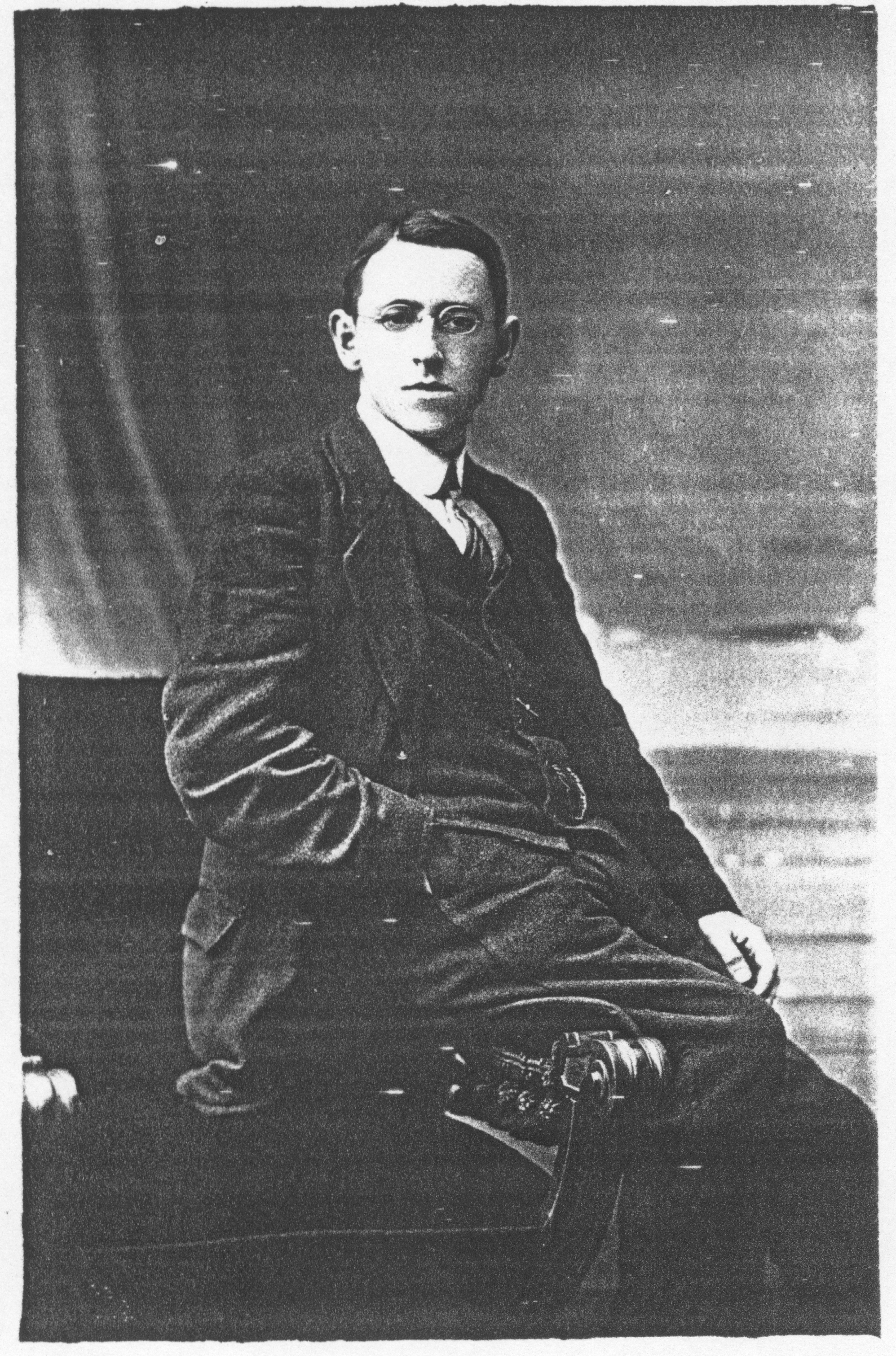
: I have now reached "sweet seventeen". Mother for a birthday present paid for my alarm clock. Father bought me in conjunction with Christmas "What a Christian believes and why". At night I found he was extending the shelves of my bookcase.
Lily gave me 1/- for a tie.
: I thoroughly enjoyed a pillow fight with Bertie before I got in bed.
. I had intended going straight from work to Arthur & Co. Oldham St. to have my photo taken but on my way to work a cart wheel going over some mud frozen over in the gutter, splashed some of the mud on my collar. I therefore went in the afternoon, after dinner.
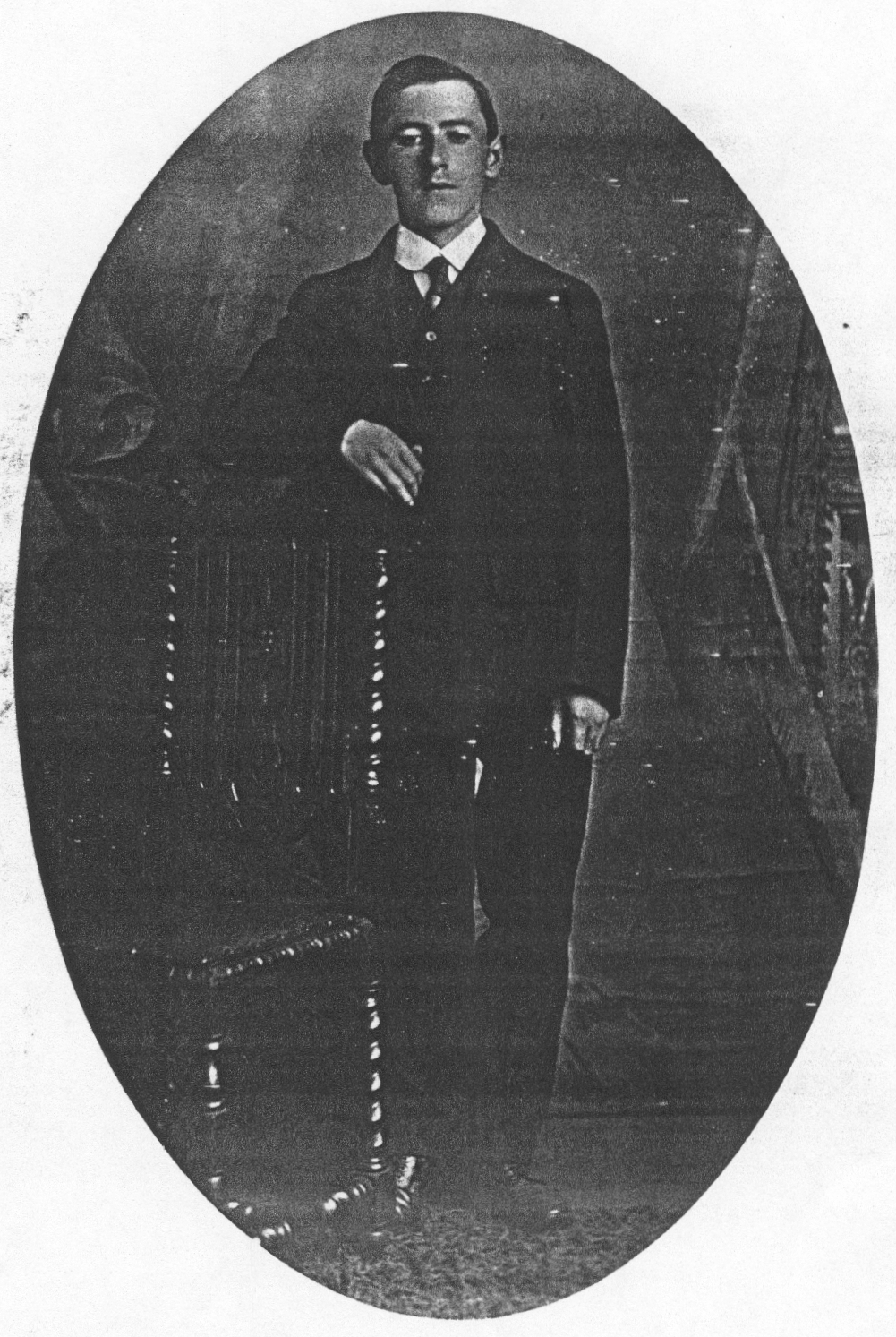
. I had made the fire first thing and did not go into the room as I usually do, with the result that the fire kept me rather sleepy. (Well, if he would get up at 4.00 o'clock!)
Noon: I spent the time in the Art Gallery and thoroughly enjoyed myself. What endless, ever real, ever-showing new features unseen before, and yet ever the same "Yesterday, to-day and forever" messages and blessings come to the believer as he gazes through the lens of the brush of W. Holman Hunt to the soul of Christ!
: After piano practice I went to Mr. Howard's and was with him from 8.20 until, looking at my watch, I was surprised to find it was 10.40. The evening's operations came to me as a long, well told and fascinating sermon from God. I saw through the microscope amongst many other wonderful things, more than a hair in a fly's feeler, I saw beauty in a spider's foot (this, particularly in the claws reminded one of the nippers of a crab.) I saw beautiful forms in minute specimens of insignificant marine life. He had received some time since a few samples of dredgings of various parts and depths of the ocean. He showed me a few of these under the microscope. The actual space the sand-like matter occupied would be about 3/8" diameter. It was a revelation to me - as was all the evening - I saw beautiful forms - small, prettily curved and rounded rocks they appeared to be, with most beautiful shapes, some of them. Mr. Howard also showed me the details of a fly's eye. He had a most delicate, clean and perfect specimen of this as of many other objects. When he showed me how he cut the sections in wax and the delicate handling they required I could realise what an amount of patience and care he has to use in the other processes. He showed me under the microscope the section of a water lily and I was astounded at the perfection the delicacy and the uses of the structure of the Stem. When I came away I thought of God's overwhelming power and love. 'The heavens declare the Glory of God' and the smallest thing in the world bears the impression of His fingers.
This extract will no doubt amuse many members of the family, particularly in view of dad's undoubted baldness in later years:
: It has been my custom for a long time now to apply to my hair a large quantity of water, as this was the only way I had of overpowering or conquering the will of its own for it is only on very rare occasions that I have been able to make my hair decent by as dry brush: This morning however, I placed a little of the sweet smelling and marvellously cheap (3 pieces for 2d) hair restorer or nurturer on the brush and then brushed my hair.
I was greatly astonished to find particular stubbornness on the part of my hair at the left front and soon discovered it was a pretty curl. I felt quite proud. I have not been to the barber's lately and towards leaving time at work at night I have lately felt my hair blowing about in all directions. Today it kept neat all through and my curl had not gone when I arrived home at night.
: A party from Rusholme went to Knutsford and Lower Peover: "We had no rain at all — instead a beautiful sunshiny day. After dinner we made for the woods. One or two started throwing pine cones at members of the party and we decided to have a pitched battle. We filled our pockets with "ammunition" and then the war began. We had a long and enjoyable fight."
: Noon: (Read) Longfellow (in Art Gallery as usual, partly in order that I may have purer air instead of the tobacco and gas suffocating atmosphere of the Office.)
: Miss Wilson told us ... after the meeting that Victor had got to a very lonely place in Canada, a great change from Manchester.
National Events and Signs of the Times 1911-1913
From dad's diary:
: Decorations for Coronation (i.e. of George V, "King of Great Britain and Ireland and the British Commonwealth, and Emperor of India', who succeeded in 1910) very numerous in town. Lewis's the best I saw. The Lancashire and Yorkshire Bank at the top of King Street decorated very well - a man was at the very top hauling a long rope of greenery up which had taken a Lot of getting up. When nearly to the top it broke causing the men a lot more trouble. There were two lots of flags on the ground and I saw an old tramp walk past raising his hat to each of them... Huge fire in Minshull St. next to Police Courts - big reflection in sky - father went - an enormous crush - Albert Square cars (i.e. tram-cars) packed with people eager to see the conflagration — all the M/c Fire Brigade turned out - reflection in sky said to be seen 30 miles round - flames seen from Heaton Chapel and Werneth Low... 4 engines pumped water from Rochdale Canal.
: Coronation of T.M. King George V and Queen Mary. Rather windy day with a few spots of rain now and then. W. Atkinson and I went to Platt Fields in afternoon... Royal Salute fired just before 6 p.m. (21 shots from 5 guns)...
Enormous crowds between 150 and 200 thousand.
: ...Saw big gang of L. & Y, Ry. men on strike...
: Town was just like Sunday - the strikers (carters) would not allow any goods to be carried about at all except where sufficiently guarded by police...
: Mr. Singleton coming in afterwards said they in the works could hear the mob rushing down the back street for an extra lot of Police had been ordered out of the Town Hall and on being greeted by a shower of stones they had charged into the people...
: Strike still continued:. In going to G.P.0. saw just 1 mounted policeman who had a sword hung on his left side...
At noon went to G.N. Ry. goods yard (off Peter St.) I listened to one of the strikers who wore his badge. A little crowd gathered round but were uninterfered with by the Police round about. Though he had a rough farmer like appearance I viewed him as a gentleman. He said he knew Manchester well and had been at one place for 40 years. He argued well and knew what he was talking about. He said things were worse now than 40 years ago, and how could an honest man with eight children like himself manage to save anything - I could have listened to that grand old man the whole afternoon.
: Strike was settled in early hours of this morning.
: First of aviators in the great "Daily Mail" race for £10,000 (started on Sat.) reached Trafford Park - went down with G. James.
: Longsight Wakes commenced.
: At night went to (Longsight) Wakes. (This was the occasion he went to the cinematograph show.)
: Young Jarvis (I do not know who he was) sails today for Canada (through his second successful attempt at stealing, though the judgment at first was that he should be sent on to a training ship. But he has to stay in Canada for 5 years to work all the time.)
: Everyone is amused to see that a schoolboy's strike is in existence for no cane and in some cases actually shorter hours.
: At his class Mr. Depledge who "was of course amongst the rail strikers and had his badge on ...said he had noticed 1 man who did not swear or drink like the others did, so he asked him what place of worship he attended. He said none because he could not afford any money for the collection. Wages 18/- a week with 9d deducted for thrift purposes. Rent 6/-. So that he had to keep wife and 4 children in food and clothing on 12/3d. a week. Shame on all who would say a word against the true striker.
(So the schoolboys' strike while Colin and Elaine were at Parrs Wood High School was not the first!)
": Rode from Albert Square to 44 Lloyd St. in handsome cab which 2 had to bring for Sir H.
: Re-opening of chapel (after extensions - extra sittings for 150 - and beautifying) night service at Wesley St. Speaker: Rev. J.T. Wardle Stafford. Subject: 'England 100 yrs. hence.'... It was not mere idle dreaming of the future. It was rather more to stir up caution lest while boasting prosperity freedom andc. seeds should be set hastening the Empire's decay. He touched exactly on the same thoughts as have been passing through my mind on the British Nation and its decay, the beginning of which I firmly believe is at hand or if not the Empire's decay the uncheckable advance of some nation and probably no European Nation either."
Looking back after 87 years there is much truth in the speculations.
": Had a nice talk with Macpherson coming home from night-school. He believes as I do that England is at the height of her glory.
: I asked for and received a rise of 1/-.
: (I have already mentioned the Daily Mail placard stating 'Tube railway for M/cr. - £1,000,000 scheme'. This never materialised of course, but the Metrolink was established just a few years ago - a return to trams, though better ones than those of dad's day. Colin was involved in re-siting gas mains in preparation for the Metrolink.)
: (A fashion note): "Today turned out to be one of the windiest days I have ever known. Came home with Elsie who had a new hat of tremendous proportions but whose arms ached with holding it on A/c of the wind."
: By the brook on the "Crown" ground a rare thing is now to be seen which came last night, viz. a light model Globe moving on 4 wheels owned by a man who has walked round the world and is doing so again. He is a tall strong looking man with only one arm, and the Globe serves for a bedroom at night being entered by a door at the back. His routes are all marked on in white and he sells booklets of his journeys to earn his bread.
: After night school I listened for a short time to the American world-walker who was speaking on the "Devonshire" ground. He said the reason for walking round the world a second time was that he had lost his wager by completing his walk nearly two years after the specified time (8 yrs.).
: The senseless Suffragettes last night in London broke windows and did other damage. 223 (by the placards) arrested.
: Ardwick Green and Hyde Road I noticed were dark (on a/c of the coal strike) though they did start lighting the lamps about 6.45 - On my way home I first listened to a female speaker in favour of "Women's Suffrage".
: Went out and bought 3 mantles (inverted) putting one of them up for the first time." (Only gas lighting at 20 Slade Grove then of course.)
: It struck me last night that I had mentioned little or nothing about the great coal strike which rages so fiercely at the present time and as I thought that in future years it might be something I should like to refer back to I decided to write a little about it....Perhaps one reason why I have not previously mentioned this great industrial strife is because it has had no direct effect upon us at home as Father got a load in before the trouble began. For a week or more we have been without a coal fire at work. One thing to be thankful for is that warmer weather is drawing nigh. Many coal dealers have not been able to get a bit of coal and three or four days ago, in town it was selling at 2/8 per cwt. and even 3/- was the price of a bag from one coal man. At some places the price has been still higher. Mr. Royle acquainted the Guild on Monday night with the fact that bowls of soup were being served out, (I think at one of the churches) in Withington which of course cannot be called a poor neighbourhood...It has been an awful sight to see men and women begging on the streets, so worn-out and sickly and poverty- stricken were some of them....The miners have been gentlemen throughout the whole strike. They are Englishmen) the masters do not deserve that name in my opinion). Though the Trades Union funds had been exhausted in many places the men had a "purpose firm, and dared to make it known." Parliament had to produce an act: The Miners (Minimal Wages) Bill, which brought in full view the great statesman the noble Christian, the true gentleman, our beloved Premier.
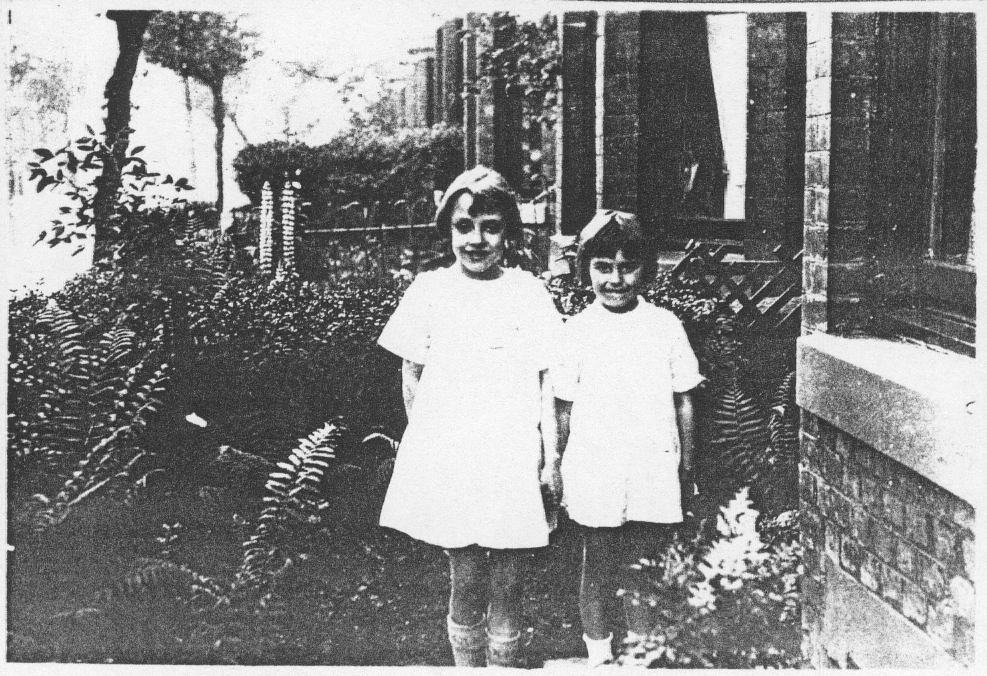
: Papers announced that electricity used for power purposes would be cut off from Thursday night to Tuesday night.
: (At Rusholme) After class we pumped water from the well under Chapel.
: In Princess Street I saw a horse with a heavy load behind it down and stayed until it gained its feet, Against the Kings Theatre an organ grinder was turning his hurdy-gurdy when a horse with a greengrocer's cart (empty) took fright a little.
The lashing it received proved harmful for it slipped and went sliding along for a few yards... I helped to pull the cart from the animal and when it had stood up I got on the flags and met Tench. Between Dickinson Road and Slade, a third horse was stopped but with a push off, it managed to keep going. I had a very enjoyable walk home.
: (This was the fateful day of the sinking of the Titanic already referred to.) By coincidence yet another film of the Titanic tragedy has just come out (late 1997).
: I took the ledger to Mr. Stark and in coming back I saw as yesterday, the old reference library being pulled down. Yesterday I saw two or three sections of the huge pillars lowered by the crane, I had not particularly noticed the Size of the building before, but the empty space accounts for a big area.
(The new circular library which eventually replaced it was one of my favourite Manchester buildings.)
: Today was the Wheelers' Race meet at Fallowfield. The day, as it always is, was fine for them and: one of the attractions advertised was an exhibition of flying by Mr. Graham White. They had an aviator once before - Barnes - but he simply left the grounds and dropped in a field just before the railway. We (Bertie and I) had a good view of what there was to view but it Was a very poor display. Not so with Graham White. I had thought he would give us a genuine exhibition and he did. He started his motor a few times before he began to rise. Then (at about 4.15 I think) amidst the cheers of the many thousands of upturned faces, both on the grounds and the surrounding lanes, he rose. I had met Harold Stringer and Gerald Tysoe and we were stood as near the grounds as we could with our backs to Levenshulme. Our part of the lane was full of people and the popular English airman let us have a close view of the underpart of his machine by passing us just above our heads, he waving as he passed. Then higher and higher soared his aeroplane. The people, thinking he would drop in some field began to move in the direction of the railway. But they soon saw him turn and back he came, going to the other side of the Sports ground and turning round his machine in a graceful manner again. The monoplane gave a beautiful display, travelling steadily with apparently the greatest ease. He went round and over our heads two or three times. Eventually he began to lower, many thinking he was, going to let in a field.
But no. When about parallel with railway and facing town, he stopped the motor and the machine gently, prettily, lowered. An occasional throb of the motor was heard in the descent and the air propelling could be distinguished. He had got low before he reached us and then he started his motor and we saw his object. It was to let us have another fine view of the machine. Over our heads he passed and then descended over the grounds. As he neared the earth we could just see him rise a little before the machine touched the ground.
: Monday was the day when the National Insurance Act came into force but it first touched us to-day and I went to the Post Office for 9 sevenpenny Insurance stamps and 2 & 6d (for the girls): My wages were 7/8 net.
: (Bank Holiday at Southport).
An aerodrome was open to the public, free of charge and we had a hurried look round at the aeroplanes and in the shed... After tea ... Bertie and I went by our two selves ... We were soon walking up and down over the sand hills and I thoroughly enjoyed it. Before we had been long on the sand a noise like the buzz of the motor of an aeroplane reached our ears and looking along the sands we saw a machine in our direction but nearer the sea.
It was the one we had seen in the afternoon. It did not get high but it went a good way along the sands and then returned. It was not taken in immediately and so we got near to the machine and had a close view of it. After a collection had been taken by the aviator who said he was only a working man and had designed and constructed the machine himself (it certainly was not well finished off) it was taken into the shed.
: Immediately after dinner Father; Bertie and I got down to the sands, carried boots and stockings and went paddling. It was father's and I think Bertie's first time, it was my second, Father went out before us, we stayed in about an hour, A state wind was blowing and moderate waves made it excitingly enjoyable. The thing which had attracted us to Southport was the Convention to which mother had been looking forward for some time.
: Through postponing my week's holiday I had to be back at work this (Tuesday) morning. (Father returns Thursday night and the rest stay until Saturday night.)
: Sir Harold who was not in London yesterday had intended coming down to the Office this morning but was called to London on account of the sneaky trick of the Tories yesterday a party of whom at a given signal on the telephone marched in to the House of Commons and defeated the Government. Absolute cowards taking advantage when the House is poorly attended as is often the case on Mondays,
: As I came home in the car I read about "The Conquest of the South Pole" in "Everyman". The article was on Capt. Amundsen and reference was made to Capt. Scott. Before I reached home the placards had told me the sad news of the death of Capt. Scott and four of his comrades, after reaching the South Pole.
: One of the thickest fogs I have ever known.
: At 7.15 I met father, as arranged and we went in the John Rylands Library to hear a lecture, illustrated on the lantern, entitled "The Early Egyptians" by Prof. Eric Smith, He had been delayed in getting to the Library and Mr. Guppy had said we would wait until 7.45 giving the Lecturer ½ hour and if he had not arrived then, he would give us a lecture on early printing. The lecturer spoke in a very clear voice and we had a splendid evening.
To end this section, I go back to dad's diary for :
"Few people there were who did not know that there would be an eclipse of the sun today. It was an ideal day for the occasion, the sun shining brightly the whole day. At noon Mr. E.H.W. had obtained some smoked glass and I went into the works and had a good clear view of the sun and the dark portion where the moon came between. It is the first I have seen and I do not suppose I shall see the next, which will be, I think, in 1999, What a historical period it would be to look back upon If I were to live till then, What new inventions would have been produced, and I wonder what old things would have ceased to be. Where also will England be then I wonder."
True enough, the next total eclipse of the sun will be in 1999 - this year, as it is now January 1999. I believe Dorothy is. to attend a reunion of her University Physics year then in Cornwall, where the eclipse may be seen best.
It is strange to look back over dad's writings in 1912 from my vantage point of 1999, After leaving school I wrote a poem about Halley's Comet, about which our Physics teacher had told us - which happened in her life-time (was it 1937?). I wrote:
"Where will the world be, and what of man, When Halley's Comet comes again?"
Well, it came and went -— and was a little disappointing to see. (Not so, the Hale-Bopp Comet the year before last.)
What tremendous changes there have been since dad's early days. But there are still wars, and trouble in Ireland, and strikes, but everyday life has been made so much more comfortable with electric light and power for everyone, the National Health Service, National Insurance, washing machines and so on.
What would dad have thought of the tremendous development of aircraft and international travel? What would he have thought of my trip to Japan last year, of our daughter living in Japan? I myself wouldn't have believed it a couple of years ago.
And then there's Space Travel! I remember dad saying once (I think it was the occasion of a lecture we went to by the British Interplanetary Society on the probability of this) that his opinion was that man would never be able to reach the moon. And yet even in his lifetime, when Colin was six years old, man landed on the moon. The impossible is becoming more and more possible.
But I think that dad would be pleased, as I certainly am, that countries which were once enemies, and much feared, are now becoming friends - Germans, and Japanese, and I am pleased that I may have, indeed, have had, the opportunity to further these links of friendship.
At a United service at the Methodist Church last year, we were praying for unity among the denominations. Is it not time we reached out for friendship with the whole world, respecting other faiths? Perhaps Humanism is a less controversial instrument in this. Elaine told me a while ago that she is more of a humanist. I have yet to discover, though, why she has called her new son 'Kristian'! God works in a mysterious way his wonders to perform.
I seem to have digressed somewhat!
Dad and War Protests 1914-1917
Harold's main diaries in my possession end on when he was 17, but I have a notebook of his, headed 'Events' <= a sort of diary from March 1915 to his 21st birthday on .
He would be 18 when the Great War broke out in 1914. He was passionately opposed to the idea of killing other human beings, so gradually his activities turned from church events (I think he felt the church had let itself down) to meetings, public and private (some of which were prohibited by the police), of organisations such as the Fellowship of Reconciliation, (F.O.R.) the No Conscription Fellowship (N.C.F.) the Independent Labour Party (I.L.P.) and meetings of the Quakers, particularly at the Friends' Meeting House in Mount Street, Manchester.
But his diary records more peaceful activities:-
": Whitsuntide Holidays. Blackpool to 24th.
: Fleetwood, Ferry to Knott End, walked to Morecambe. : Walked Morecambe-Kendal. : Kendal to Windermere and back (walk). : Windermere-Carnforth, Silverdale, Carnforth, Lancaster (walk.)"
No mean walking tour for a lame man!
On : "Unexpectedly in Wilmslow Rd. met D.B. who agreed to proposed walk on Saturday." This may or may not have been mother. There was, curiously, another Dorothy Broome, but mother would also have been in the Rusholme circle.
": Had enjoyable walk with DB: Car to Hyde and walk along Peak Forest Canal to Marple and then to Stockport. Car home.
": Ordered Raleigh bicycle. : Cancelled Raleigh and ordered 'Trusty'.
": First visit to a theatre. In company with the Watts to Gaiety where "Pictures" and "Joan Danvers" took the stage." He made several other visits to theatres at this time - rather a change from his earlier views.
In January 1916 anti-conscription activities were growing:-
": Spec. Ord. Friends Mtg. and after mtg. over 150 (men of military age mostly) against Conscription.
: 100-150 men of military age at our "Men's Meeting" pledged against Conscription.
: Big Anti-Conscription Demonstration in Stevenson Square
2.30. 6.30 Mount St. Meeting House packed. Conscience and Compulsion, J.W. Graham and Layton Richards."
Then on :-
'Received notice under Military Service Act calling me up from Reserve to present myself at Town Hall, 13.3.16."
But arrived and the only entry is 'Called on way home from work at Watts. Had tea. Good conversation with Ashton (home with Appendicitis) and others.
: Recd. notice to appear at M/c Tribunal.
: Appeared before local tribunal. "Not sufficient grounds for granting exemption.'."
At Easter he took a bike ride: ": Good Friday: Bike; Left home 6.0 a.m. Stockport 6.30, Wh: Br. 7:40. Sheff. 12.0, Free wheel out of order 2.0 Conisboro 2.30-3.30 While waiting for bike an Army Aeroplane flew over C. — Doncaster (here I saw 3 flights) - Thorne and Goole - Swinefleet 6.30. Slept with Uncle A. - Spent half hour with Aunt Emma - Gertie was out. At first neither of us recognised the other. She seems to have worried herself thinner." (I am not sure who Aunt Emma was.)
": left Swinefleet 7.30 a.m. with Uncle. Left him at Goole shop. Snaith 8.30, Pontefract 10.30, Wakefield,Huddersfield, Oldham, M/cr, Longsight 7.0.
: Received notice to appear at Appeal Tribunal. ¾ hr. in Appeal Tribunal.
: Mr. Crook-called me to his Office. I said I was now an absentee. Option of resigning or being dismissed. I resigned and left at noon."
: Received Non-Combatant Certificate.
: To-night received Army Form W.3236 calling me up for service to report at Town Hall to-morrow 9 a.m." But next day:-
: 8.15: Left home on bike, Rain at first. Strong opposing wind all way. Pendleton, Blackrod, Preston, Blackpool 4.0. Left B. at 4.40 home 10.20.
: Called at N.C.F. Offices and found a Police Raid in progress. Detained and searched. Supt. Lewis on making certain we were deserters asked if we would walk with him to Town Hall. We went (Harrop, Garner, Hunter, Birchall and myself). At Town Hall a warrant taken out against us. Night in town Hall cell.
: Sat. morning left Town Hall in Black Maria. Charged as absentees at Minshull St. and handed over to Military Escort of 3 soldiers. Tremendous cheering on London Rd. Station. Taken to Ashton Barracks Guard Room. Harrop and Hunter taken to Bury. Joined by a wounded soldier.
: Sunday: Soldier left and two others entered.
: Monday: Left. G.R. for Medical examination, 2 Doctors passed me but taken before Major and rejected. Left Ashton at Noon.
: Rose at 7.10. Left home at 8.50 with message for J.A. Harrop through R.J. L. (?) Then cycled to Lloyd and finally left Heaton Moor at 9:45. Cycled through Cheadle, Altrincham, Northwich, Chester, Saltney, Hawarden, Holywell, Rhyl, Abergele and Colwyn Bay, arriving at 10 Rhiw Bank Terrace (where mother, Miriam and Gladys are staying) after dark at 9.45 p.m.
: To Rhos and back before breakfast and before others got up. 10 a.m. left C.Bay. Arrived at Kinmel Park Camp, Abergele at 11.00 a.m. Got a permit to visit A. Whipp and H. Davies for half an hour 'in presence of a guard.' The Guard however was not present all the time and told me before I left that had he known what the Army was 9 months ago when he joined, he would not have been in khaki to-day. I was in for an hour. On Friday the resisters are allowed to remain outside the hut on the grass and I was soon seen and recognised by the two I had asked to see. Skellern also came running up to me and shook hands very heartily... They had in the Guard Room a copy of C.D. Morel's "Truth and the War'. I left Kinmel at 12.0 and kept to the Coast road and the Dee side to Chester. (I had not been successful in hitting this road in going) and thence nearly the same way home, arriving home about 9.45."
": Commenced work at the (State Insurance Section) Amalgamated Union of Cooperative Employees, 22 Longmillgate, Fennel St. The hours are 9-5 with dinner hour 1-2 and Sat. finish at 12.0. Wages 24/- plus 3/6 War bonus.
: Paid first visit for months to Rusholme (Guild)... Strangely, my visit coincided with the return home on furlough of W. Tysoe. I expected to find him a Militarist but on shaking hands with him. he said a cutting of my doings had been sent to him and he didn't blame me. He thought if he'd known what he was to go through he'd have shot himself. He wished he were a C.O." (Conscientious Objector?)
: Went to guild "At Home". Mr. Royle at tea with us but an indescribable barrier between us prevented any real conversation." (His son, I believe, had been killed in the war.)
"Not so, however with Mrs. Greaves, Victor's mother. One soldier son missing, doubtless dead, and the other killed, she yet bears it bravely and could tell me she advised all who could to keep out of it. She longed for peace.
Spent some time in conversation with....Mrs. Evelyn Greaves," (i.e. Victor's widow) "Clara Wilson"(her sister) "D. Broome,... Enjoyed myself. Thick fog made journey home slow. Many people carried tapers, candles etc.
: Today is my 21st birthday. Mother presents me with 15/- for a fountain pen. Miriam gives me 2 Home University Library 1/3 books. A. Whipp, D.B.W. and Aunt Esther send greetings. The main thing of moment to me is that I can now act politically without the fear of bringing penalties for my acts, on my parents, as a minor. I shall be responsible. I shall suffer any punishment,"
And there his account ends, mid-sentence.
These events provide much food for thought, reflection, and no doubt, controversy.
Perhaps this is an appropriate point to quote Grandma Emily Wild's lovely poem -
SEAGULLS ON PEACE DAY
(Written at Douglas, I.O.M., on Peace day, 1919.)
Lovely white seagulls, wings tipped with black, Crossing the water in steamer's track, Drawing our thoughts away to things above, Making us realize that God is Love. Beautiful seagulls, hovering round, Giving enchantment to sight and sound, Flapping your glad wings, soaring away, Quickly returning on this peace day. Hark the guns booming, hear the bells ring, List to the music, God save the King, Lads dressed in khaki, lads dressed in blue, Happy and joyful, and thankful too. Heads bowed with sadness, hearts wrung with grief, Now tears of gladness, bring sweet relief, Weeping for loved ones, gone, gone for aye, Others returning home, soon, to stay. So with thanksgiving to Him we raise, Our hearts and voices in fervent praise, For all who helped to check the great tide, For all who fought for us, suffered, and died.
Dad's life 1918-1930
a) Work
On the Great War ended. I have no note of dad's further doings in relation to conscription, though Dorothy has some papers, I believe.
Eventually (I don't know when) dad got a job as a rent- collector with Greenhough's estate agents, for whom he worked for many years, till about 1940 I think. His area was the inner suburbs of Manchester and he used to do his rounds, or at least go to work, on his bicycle. He generally finished fairly early, but was not paid very well, but on the other hand he was fortunate to have steady employment throughout the Depression. In about 1940 he became dissatisfied with his pay, and got a job as temporary rent collector with Manchester Corporation Housing Department, where he worked till retirement, having three rounds at Wythenshawe. The job was designated temporary so as to keep the job open for employees who had joined up, so he was not made 'permanent' for some years. One employee who did not return had served on the Arctic convoys to Murmansk, and Sadly perished in the course of his duties, if I am not mistaken.
b) Rambling
After the Great War, his anti-war activities diminished, but he kept in touch with many of his peace movement friends. He had indeed taken Mr. Greenough to one of their meetings, so this contact may have led to his job with Greenoughs. A number of these friends organised various rambling clubs, and dad was an enthusiastic participant in their rambles.
This led to his life-long interest in rambling. On most Sundays he would be out in the Derbyshire hills which he loved. (This curtailed his church attendance of course.) He joined the Peak District and Northern Counties Footpaths Preservation Society in its fairly early days (though it had been founded at the end of the last century.) He served as footpaths inspector from 1921 until 1951 and from 1949-1951 was Secretary of the Society. This was really his life's work.
Dad was always a person of integrity, and in his footpaths work he consulted old maps and records at the Derby Record Office and elsewhere to establish whether a particular path was a right of way. Only if he was satisfied that it genuinely was a right of way would he fight for the footpath, confronting landowners and gamekeepers when necessary, which I must say he relished, though essentially he was a peaceable man.
When mother was in her late 80s or 90s she wrote the following account of an incident which occurred on a ramble With dad; either in their courting days or some time early in their marriage:-
Encounter on Doctor's Gate
"Of all the lovely walks within easy access from Manchester, the Glossop-Hayfield via Doctor's Gate and the Snake Road is surely the most inspiring. Following the little stream from Old Glossop we have the extensive Bleaklow plateau rising on our left; and on the right the craggy granite peaks of Kinder.
"So when Harold suggested we should do the walk in reverse I immediately acquiesced. After a nice ramble from Hayfield over Mill Hill, we soon reached the Snake Road. After sandwiches at the Inn we made our way to Doctor's Gate, Harold telling me that after deep and thorough research the Landowner, Lord Howard's solicitors had at length conceded a right of way through, and instructed their tenants that all obstructions should be removed.
"However the P.D. &. N.C.P.S. had received complaints that the gate by Mossy Lea was still closed, and sure enough when it became within our vision at that moment a shouting figure was coming down the slope at breakneck speed, hoping to forestall our passage. Lame though he was, Harold was over the gate in a jiffy, as the farmer reached it.
"Then proceeded a shouted argument, each point emphasised by a sharp hit on the top. There would have been some spoiled beauty had it not been for the gate. Getting more and more heated the row went on for at least fifteen minutes. Meanwhile, I froze like the proverbial Indian, lest I might divert the irate farmer to look in my direction. Eventually he turned aside and seemed surprised to see a woman standing there. Hesitating just a moment he unlocked the gate and let us both through.
"Mopping his brow, my gallant escort said, "I'd forgotten you were there!" Well, what other could be expected from a fanatical footpath inspector?"
The Mass Trespass has been much publicised, but dad was totally against this. He and others had been patiently negotiating with the landowners for some years for access to Kinder, and were hopeful of a satisfactory conclusion to their efforts. But the Mass Trespass, according to dad's way of thinking, as quoted in Howard Hill's book 'Freedom to Roam', had set the campaign back "20 years, at a time when we were beginning to break the power of the owners and getting them to meet 'us across the conference table." This was made worse in view of the violence which was occasioned. The popularly held belief these days is that the Mass Trespass led to access to Kinder but my father (and mother) and some others certainly did not hold this view. It is a controversial point.
Kinder Scout and Bleaklow were some of dad's favourite haunts. He loved the wild country of the moors (no pun intended!) He was also very fond of the North Wales mountains, and as I mentioned earlier, on one occasion climbed on Crib Goch, an. extremely rocky and fearsome ridge. The Lake District and North Yorkshire were also favourite walking areas.
Dad sometimes did very long walks, usually with his lifelong friend, Donald Berwick, and Fred Heardman, who was known as 'Bill the Bogtrotter' and who later owned the Church Inn at Edale. On one occasion they embarked on a 40-mile walk from Edale to Marsden (Yorkshire) but unfortunately dad had to retire after some miles owing to blisters from a new pair of boots.
A tribute to Harold Wild by John Harrop, for which I furnished some details, was published in the 1997 Annual Report of the Peak and Northern Footpaths Society (as it had been renamed) and it says for many years after his term as Secretary "Harold served as vice-president and elder statesman. He died on at the age of 83, much loved and respected by all who knew him. Very few Harold Wilds pass this way, but 'There were giants in those days.'"
After his death a memorial bridge was erected to his memory, Situated at Rowarth, Derbyshire, and mother, Dorothy, and I were privileged to be at its dedication. Unfortunately, some years later, in a flood, the stream changed its course and so the bridge is no longer over the main stream!
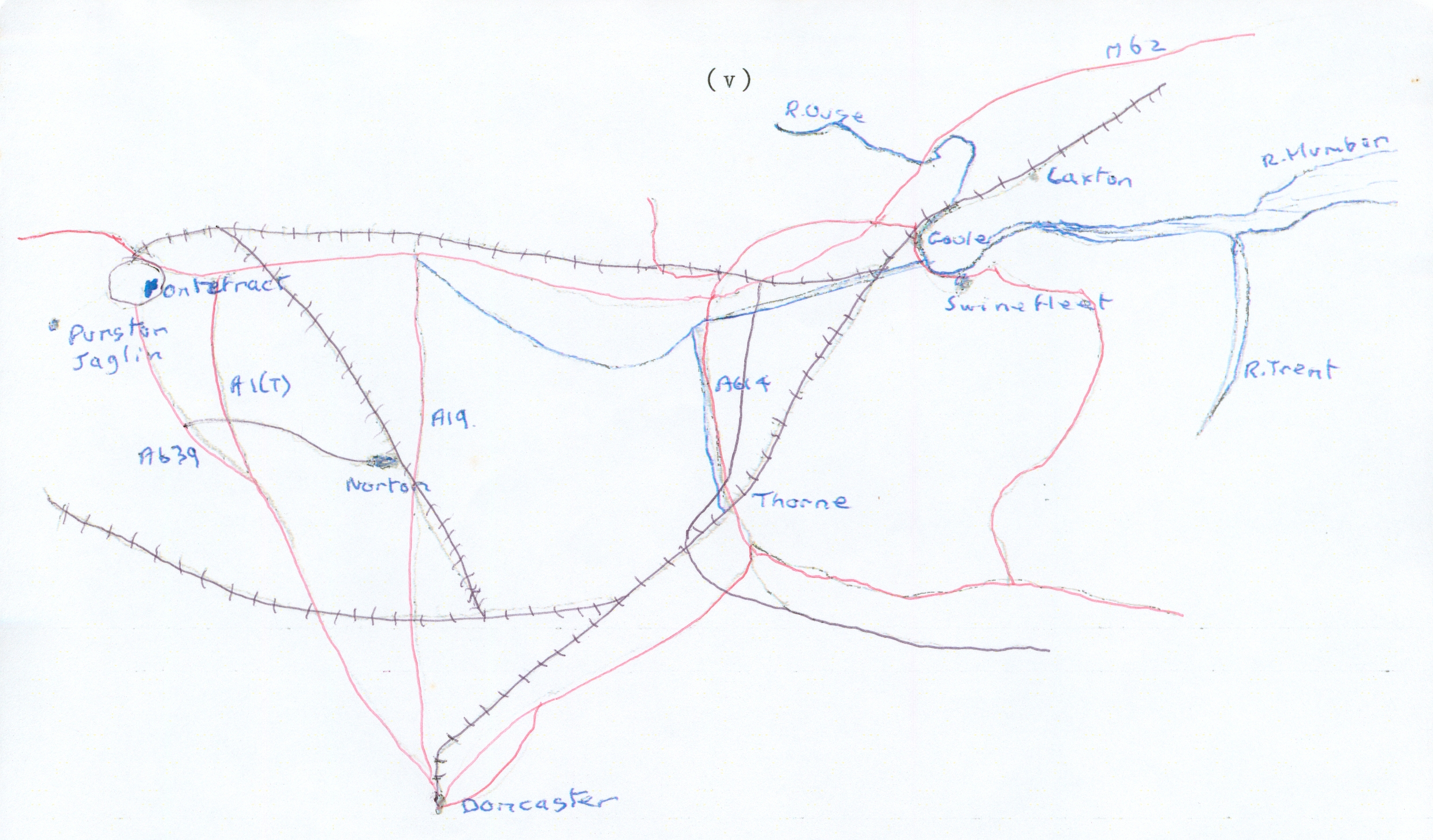
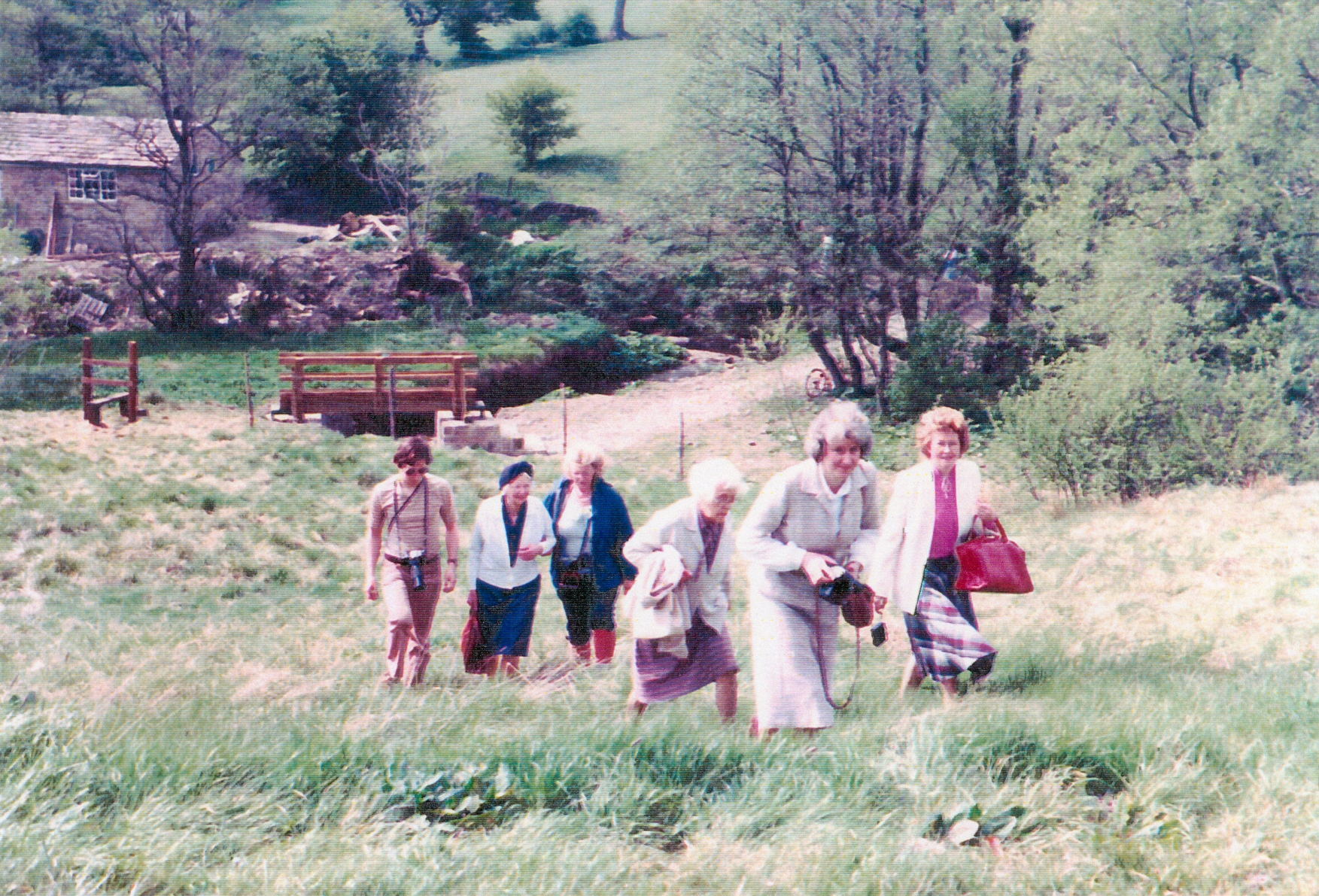
c) Courtship
Dad had known Dorothy Broome for many years, from the Rusholme Wesleyan Chapel days, and they had both given 'papers' at Guild meetings. At that time they were each just one of the circle, and mother did not take dad's pacifist stance.
I am not sure when they began courting in earnest, probably about 1928. They became engaged and were married at Rusholme Wesleyan Chapel on Dickenson Road on . Bert was best man, and grandma and grandpa were there, also mother's brother Tom and sister Flo, and possibly Eva. They went to the Black Forest, Germany, for their honeymoon. Dad had been there previously on one occasion and was saddened to see war memorials to the German dead, just as in England there were memorials to the English dead. There were many bereaved mothers in both countries. At first for a year or. so mother and dad lived at Lindleywood Road, Fallowfield, Manchester.
Matthew and Emily's family
a) Matthew Wild (Grandpa)
Matthew was a hard-working, clean-living man and looked after his family with loving care, though sometimes he could grumble about the gas lights being left on, but he was evidently a good husbandman (as when they paid off the debt on the house when they had a legacy). He was a loving father, with a kindly touch, as witnessed when dad found on his birthday that his father had been extending his book-case.
He was a joiner at a Manchester Corporation Depot in Gorton, as I have said, and he also made various items of furniture for his home and stools for his grandchildren. We had three bookcases for many years at Burnage that he had made, one glass fronted. Dorothy still has the wall-hung one. We also had a writing-table with a double lifting lid, that he had made - unique in that the top formed a draught-board, made of individual squares of different coloured wood. I know he was hard-working because I have found that wood-working is very hard physical work, and at my class I have numerous machines to help!
b) Emily Rebecca Wild (Grandma)
Emily too must have been hard-working with five children to bring up. But her salient characteristic was her extreme kindness and loving nature. Mother tells a story of how she was at Slade Grove one day. It must have been not long after 1915 (she knew 'Mrs. Wild' of course through the Rusholme Wesleyan Chapel.) at which time mother had a care job at Withington Institution (i.e. Workhouse). On this occasion, grandma was out for a few minutes and when someone came to the door, mother answered it to find an old woman selling tapes. However, she refused to buy any, as she recognised the woman as an inmate of the Workhouse and knew that she had obtained the tapes to sell, by cutting short the tapes on the workhouse aprons! When Grandma returned, mother related the tale of the visitor, but Grandma's response was "Well, never mind, I can give her double next time she comes!" Maybe this is the reason Grandma borrowed coppers now and then from Harold!
Despite Grandma's busy family life, she found time to take an active part in church activities, speaking now and then at meetings. I know that in later years she spoke - or even preached maybe - at the little Methodist chapel at Kettleshulme. She also visited neighbours who were ill, and grandpa supported this. She was a true Christian!
She had a sense of humour, however, (which is not, of course, incompatible with being a Christian - perhaps it's even essential.)
I have a single page of a diary of Grandma's tucked away some- where. On various days (when the children had homes of their own) it says, "Went to see Miriam," or "Went to see Lily," or "Guild Meeting." On one of the other days, in dad's writing it says, "Mother's night in" Underneath, in grandma's writing, it says, "You are wrong - mother's night out - went to such and such a meeting.:" This also instances dad's sense of humour. Although he was a rather serious young man, as he grew older he developed a great sense of humour.
At the family parties of later years, it wouldn't have been the same if dad hadn't brought out the old chestnut: "Would you like some trifle?" -— "Yes, just a trifle!" He was so fond of puns that in the family each pun-joke became known as "an Uncle Harold", and the cousins, and notably, Uncle Arnold, competed with one another to make the most execrable pun.
Another talent of grandma was that she wrote poetry, which I have already quoted. I am particularly pleased about this as I do the same. I don't know how much she wrote but I have a treasured, though battered, anthology of 'The Poets' Own Library' (probably of the sort known as vanity publishing), which contains grandma's two poems 'Seagulls on Peace Day' and 'The Country' a longer poem with both seriousness and humour. Inside the anthology is a printed sheet containing grandma's poem 'My Mother's Grave' referred to earlier. Several members of the family, including Cousin Joyce, and Laurie Lister, were surprised to learn that grandma wrote verse. Perhaps she was shy about it - as I used to be for some years. Dad also wrote verse, but latterly mainly comic verse. He always used to concoct a rhyme about his colleagues for the office Christmas party, and he and I had one or two exchanges of comic verse.
c) The Bungalow
Although it does not strictly come under the section heading, I cannot go further without mentioning 'The Bungalow', a place that brings happy memories to many of the family. In the mid or late 1920's, Bert, who was a keen scout and scout leader, used to camp under canvas in a field at Lyme Handley, between Disley and Kettleshulme, in the grounds of Handley Barn Farm, below the road. The field led down to a wood behind a fence, and in the wood was a stream, which led to the Todd Brook. In about 1928 I think, Grandpa Matthew himself built a wooden bungalow or weekend hut in this field, beside a tree-lined tributary brook.
This hut, although small, passed into dad's possession on his father's death in 1935, and many family gatherings were held there throughout the years. Eventually after the war dad sold it to Uncle Arnold and some years later he gave it up, and after being derelict for a time, it was eventually demolished.
'The bungalow' was really a too pretentious name for our hut, but according to mother the reason was that there was a much bigger bungalow much further down Mudhouse Lane (the name of our road) which was called 'The Hut'! So ours became the Bungalow.
We have various photos of the bungalow in earlier (and later) days, and all the cousins went there. Auntie Miriam and family usually had a week there when dad owned it. We rarely went up in the winter, but on Good Friday mother, dad, Dorothy and I would go and while the older ones cleaned up after the winter, we'd play in the field or by the stream and had great fun. On Easter Monday it became the tradition for as many members of the family as possible to go for the day.
The hut was partially divided into two compartments. The further one held two bunks, and two camp beds could be put down there at night. The front part had one front door, an iron stove on the left of the door, and a long board table covered with white American cloth under the window. A similar removable board table was in the further part of the hut. We had a small paraffin oven, a paraffin heater, and there was a large marble slab for cooking activities. There was also a very small bookcase near the window, containing some choice volumes. A window, dressed with blue and white curtains, lit each half of the hut, with an additional smaller window at the back end. Shutters were put up at the windows each time we left. The whole building was painted Middle Brunswick Green - I know because it had to be repainted from time to time. There were three or four steps up to the door, a garden at the front with a rustic rail to keep the cows out. A path led to some steps down to the stream where water could be obtained, but after discovering a dead sheep in the stream above the road, we always fetched drinking water from a well in the field above the road. The toilet was a wooden hut some yards down the field with a wooden seat and a container underneath which dad (to mum's disgust) referred to as the 'fruit can! This of course had to be emptied once a year or so, and a hole had to be dug to receive the contents - a job which much detracted from mother's enjoyment of the bungalow.
Grandma I think had planted some daffodils in the garden and almost always at Easter the garden was gay with the small yellow wild daffodils. Dorothy and I often had the job of fetching water, and milk from the farm. In the early days the farm was held by Mr. and Mrs. Williamson, an elderly couple (or so it seemed to us). Sometimes we'd go into the farm kitchen, a big room with an old fashioned range for cooking. Mrs. Williamson was a sweet old lady with grey hair piled on top and she'd sometimes give us a glass of milk. Her husband would stride in from the farmyard, through the scullery, with its slopstone, in his knee-length boots. They had two delightful grand-daughters, Dorothy and I think, Margaret.
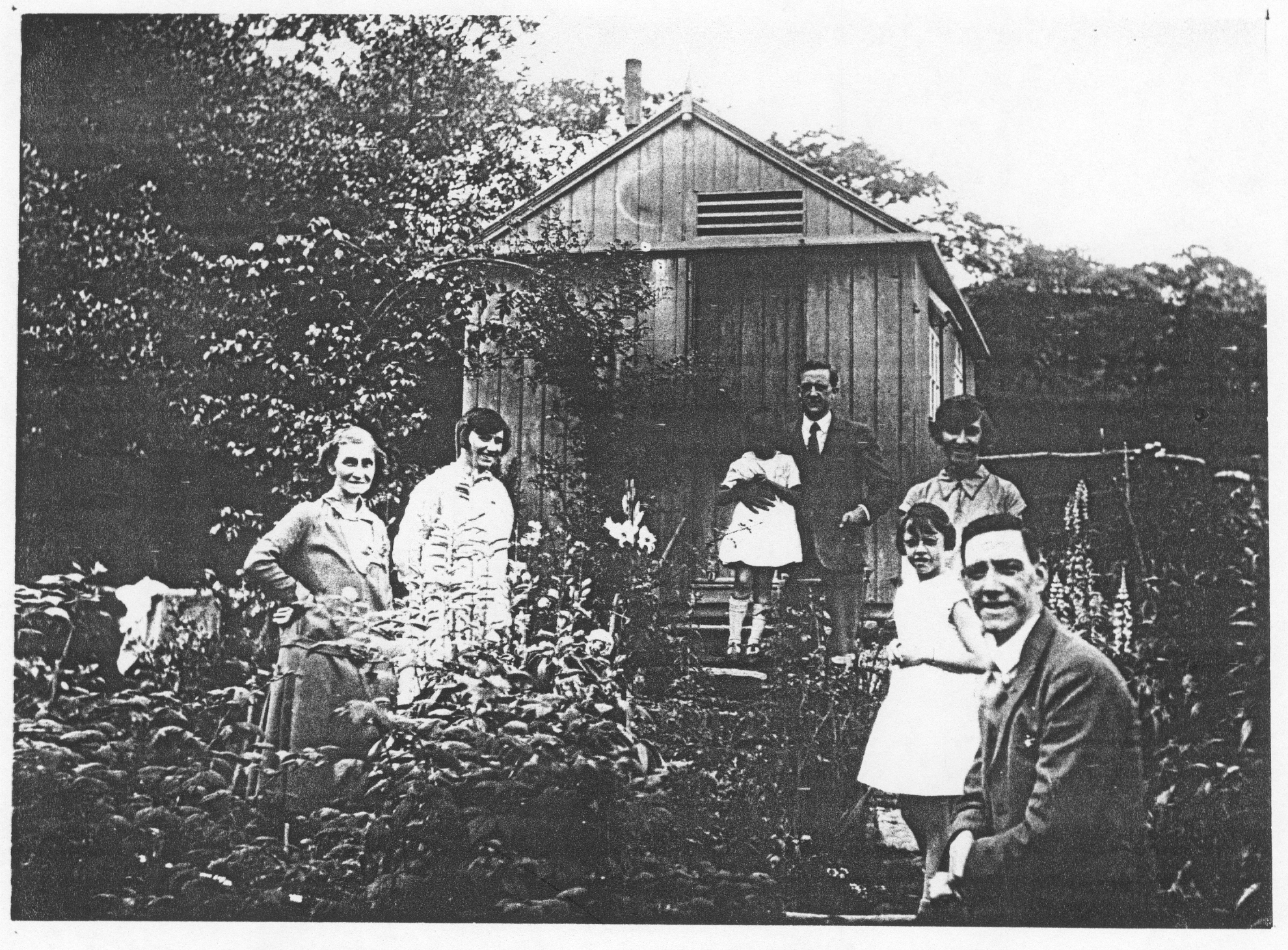
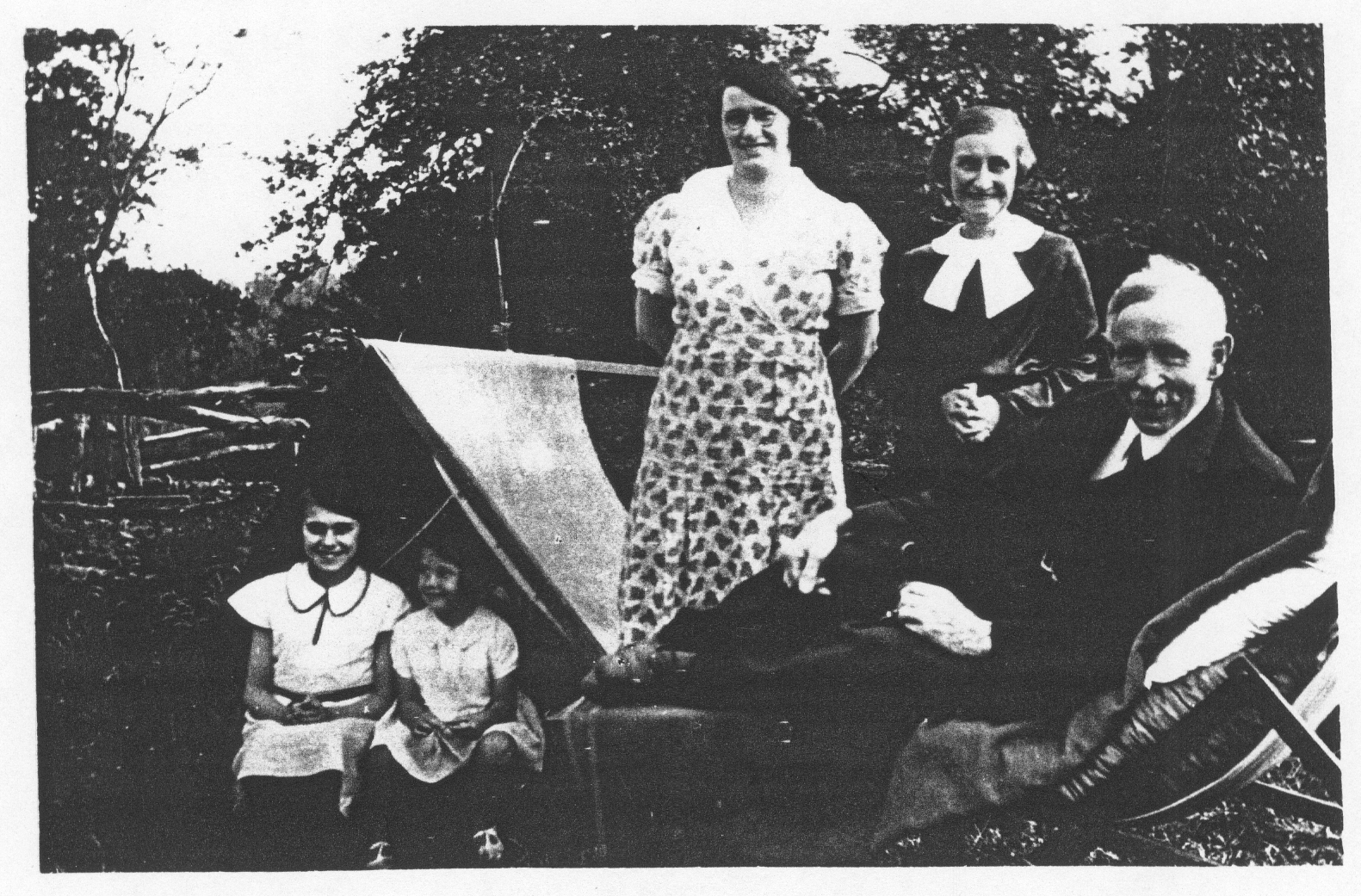
Mother, dad, Dorothy and I used to go to the bungalow quite frequently, and would perhaps spend a week there in summer. It was two and a half miles from Disley station, an hour's walk, and sometimes we would go through Lyme Park. If the weather was good on Easter Monday, after a lunchof sandwiches, there was usually a party wishing to climb Black Hill, the hill opposite.
(We trespassed through the wood and over the stream and up the hill to' a public track, and then through a gate and up the heather-clad hill.) Afterwards we would play a hilarious game of cricket in the field, when I for one couldn't play for laughing! If it was wet, though, we'd all squeeze into the hut (perhaps twenty-four of us!) and eat our sandwiches, listening to the rain cannonading on the corrugated iron roof. It was much pleasanter to set up the board tables in the garden when it was sunny.
Many are the happy memories of the bungalow! There was one sad occasion though, which I don't remember. In 1935, Grandpa was at another well in the field across the bungalow stream, fishing for tiddlers or tadpoles with cousin Jack, who was six years old, when Grandpa collapsed and died from a heart attack. It was perhaps fitting that he died whilst at the bungalow, which he had built, for the ultimate enjoyment of all his family.
These annals are long enough, and to save boredom, and any embarrassment by my comments on living members of the family, I will only briefly summarise the next generations.
d) Harold and Dorothy
Their children were myself (Pat) born in 1932, and Dorothy Constance, born in 1935. I married Norman Moneypenny (who worked for I.C.I. at Blackley) in 1955, and Colin John was born in September 1956, followed in 1960 by Elaine. As the children grew up I worked for 13 years as a secretary at Manchester University, Extra-Mural Department. Colin married Sheila, who has a son Robert from her first marriage, who was born in 1984. Elaine's second marriage is to Edwin de Vries (a very pleasant Dutch young man) and they have a son Kristian, and at present live in Japan, following Elaine's six or seven years in Holland.
Dorothy became a minister (after teaching for a while) and married another minister, Keith Spence, and their daughters are Janet and Fiona.
e) Lily and family
Lily married Sam Beck (the parson in the Sunday School sketch already described). They had two daughters, Grace and Doreen. Sadly Doreen died aged 7. I am not sure which girl was the elder. Grace married Norman Fewster, and they had two children, Christopher and Jaqueline (Jackie) . Jackie has a son Martin, whom we were pleased to meet at one of the family reunions a few years ago. They live in Prestatyn.
f) Miriam and family
Miriam married Arnold Whipp (already mentioned) and they had two daughters, the first Marjorie, who married Percy Redfern, and they had a daughter Anne, and now have two grand-daughters,
Zoe and Esme, and two or three great-grandchildren. Marjorie later divorced and married Maurice Horrocks. Miriam and Arnold's second daughter was Joyce, who married Syd Eachus, and they had two children, David, who married Joanne, a New Zealand girl, and they have a son Sam; and Susan (Sue) who has a daughter Emma. After Miriam's death, Arnold married Thelma, but both have since died.
g) Bert and family
Bert married Lily Hopwood, who attended Levenshulme Wesleyans. They had two sons, first Peter who married Ann Wouters. Peter has taken part in many amateur operatic performances. They have a son David, and daughter Diane, who are both married and have one, and two young sons respectively. Bert and Lily's second son, Donald had a banking career and married Lorna, and they have a son Graham who married Elizabeth (Liz) a year or two ago, and a daughter Gillian, who is a radiotherapist.
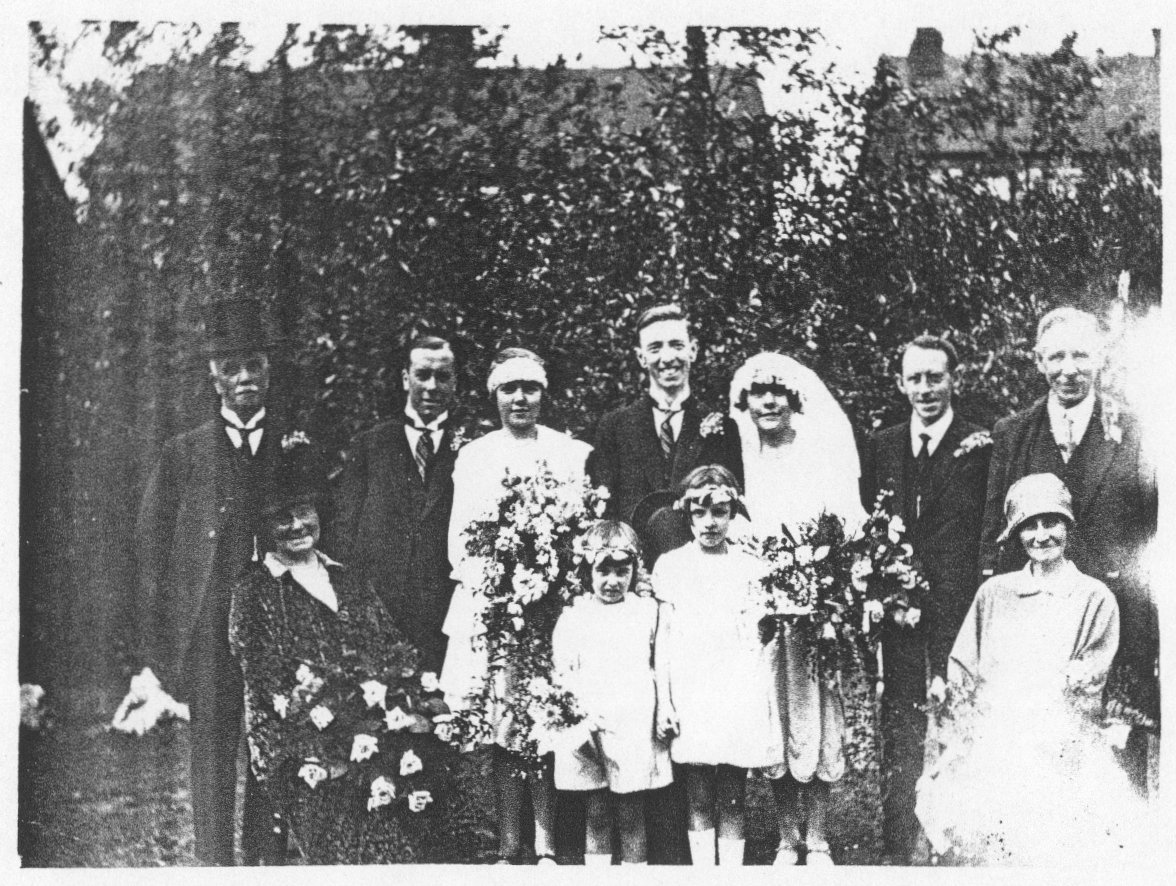
h) Gladys and family
Gladys married Harry Willcock and they had two sons, Jack and Eric. When Eric was three years old, sadly Gladys died, and Harry's mother, Mrs. Willcock brought up the boys. When the boys were grown-up Harry married Kath and they had a son, David, a very pleasant young man. Jack married Joan, and had two daughters and a son, but sadly Joan died when they were growing up. Jack has since married Dulcie, a pleasant lady interested in choral singing. Eric married Margaret and they have two daughters and three sons, and are a talented family.
Family Gatherings
I have already given an account of the Easter Monday family gatherings at the bungalow. When most of us lived in Manchester, as the cousins were growing up, we also used to have a family party on Boxing Day, the location being rotated between the different families. When Lily Beck's family moved to Prestatyn, they were no longer able to join us, though we did see Lily occasionally during the year. But I particularly remember one Boxing Day party at our house, on a raw day, when all the youths had been to the football match, Uncle Bert, Harry and I think Arnold too. Mother, backed up by Auntie Lily who had been helping to prepare the meal, stood panic-stricken as several very tall hungry cousins and uncles strode into the Living room. Would there ever be enough to feed them all? But of course, there was.
After tea we'd play 'Family Coach' in the front room, (with some competition for the comfortable, as opposed to the improvised seats), or pencil and paper games, and a jolly time was had by all!
When mother was 90 years old we had a party in the village hall, but when she was 100 we had a bumper gathering at a hotel with many members of her side of the family as well as the Wilds. Mother and several of us thought afterwards - why don't we have these gatherings more often? And so the idea of the family reunion and ramble was born. Mother, despite her years, was eager to join in the first one, which was arranged for April. Sadly, she died the same week, and Uncle Harry also died not long afterwards. But we knew mother would want us to carry on, so we went ahead, and had a wonderful ramble round Lyme Park, led by Donald, and a wonderful feast at Eric's home, Brow Farm, High Lane, and Margaret was there too. So we have had a reunion each year since:-
| Location | Ramble | |
|---|---|---|
| Eric at High Lane | Lyme Park and site of Bungalow | |
| Eric again at High Lane as he was planning to move to Cornwall. | Lyme Park and Pott Shrigley direction (8 miles) | |
| Pat and Norman at Ulverston | Elterwater and Little Langdale (6 miles) | |
| Donald and Lorna at Two Dales near Matlock | Round Chatsworth area | |
| Joyce at Uppermill | Round Uppermill area followed by boat trip on canal. | |
| (planned) | Peter and Ann at Wheatley, near Oxford | Chilterns |
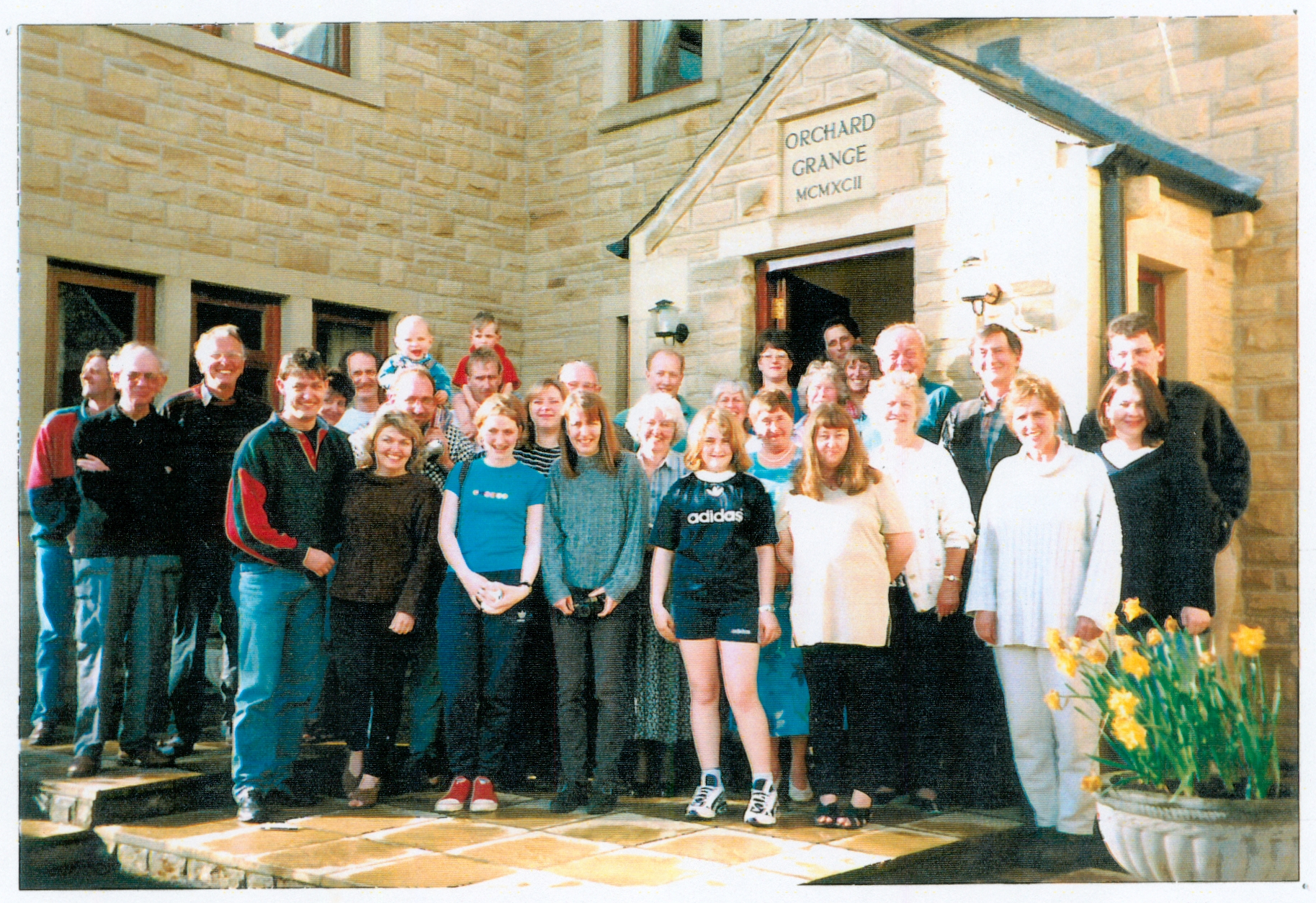
- Eddie (Janet's boy-friend)
- Norman Moneypenny (Pat's husband)
- Donald Wild
- Edwin de Vries (Elaine's fiancé, now husband)
- Joanne (David Eachus's wife)
- Keith Spence (Dorothy's husband)
- Elaine (Pat and Norman's daughter)
- Paul (Diane's husband)
- Max (Diane and Paul's son)
- Sam (David and Joanne Eachus's son)
- David Eachus (Joyce's son)
- Fiona (Dorothy and Keith's daughter)
- Janet (Dorothy and Keith's elder daughter)
- Diane (Peter and Ann's daughter)
- Jack Willcock
- David Wild (Peter and Ann's son)
- Dorothy Spence
- Emma (Sue's daughter, Joyce's grand-daughter)
- Lorna (Donald's wife)
- Heather (David Wild's wife)
- Graham (Donald and Lorna's son)
- Liz (Graham's fiancée, now wife)
- Joyce
- Ann (Peter's wife)
- Sue (Joyce's daughter)
- Peter Wild
- Eric Willcock
- Dulcie (Jack's wife)
- Margaret (Eric's wife)
- Andy (Rachel's husband)
- Rachel (Eric and Margaret's daughter)
Ones underlined are cousins of each other and grandchildren of Matthew and Emily Wild.
Pat does not appear on the photo as I took it!
So, looking forward to our next family reunion, I will end the Wild and Gringley Annals. We are a happy family, with a strong sense of tradition, and many remarkable and hard-working and honest forbears. We are ever extending, genealogically, and geographically. As Donald says, "A talented family."
© Pat Moneypenny (nee Wild) . Ulverston.
Addendum 2026
Pat's booklet was digitised by Ben Nuttall (grandson of the aforementioned Laurie Lister) in 2026. I happen to live about 20 minutes from the house Harold grew up in, and have been to see the house:
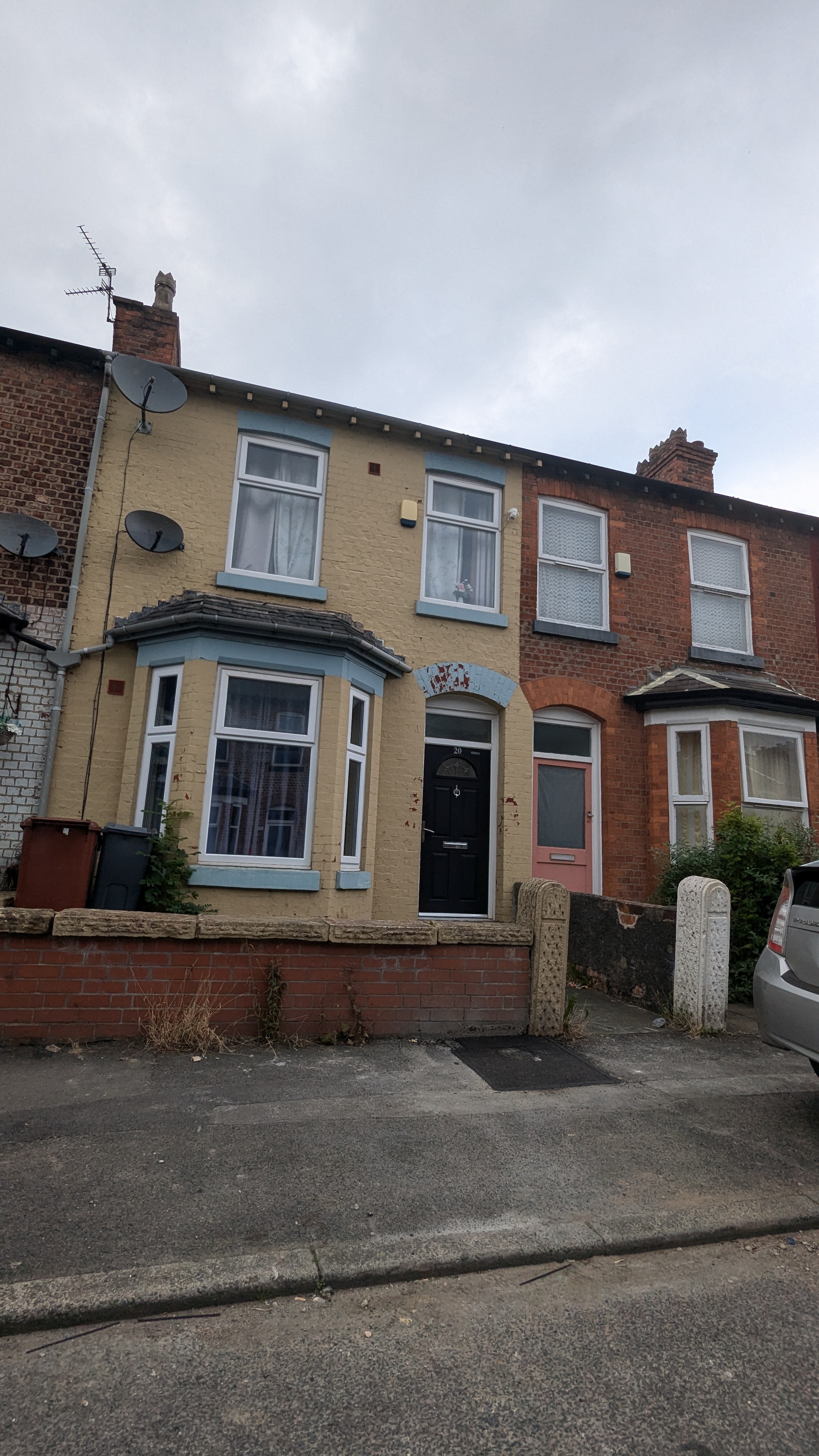
I also managed to find the grave where Matthew, Emily, Gladys, Miriam, Arnold, Harold, Dorothy and Lillian, are buried in Southern Cemetary in South Manchester: